

Detroit’s starting netminder exited last night’s game early with an injury.
The Detroit Red Wings secured an important win in the Eastern Conference race on Sunday night, but the victory came with a brief scare after starting goaltender John Gibson exited the game with an apparent injury. Fortunately for Detroit, veteran backup Cam Talbot stepped in and helped the team finish off a shutout victory over the New Jersey Devils, marking the Red Wings’ first combined shutout since 2019.
Gibson had been playing well before the incident, stopping 20 shots through two periods. The injury occurred when a Devils forward crashed the net during an offensive push, making contact with the Red Wings goaltender. Following the play, Gibson appeared uncomfortable and did not return for the third period. The Red Wings medical staff quickly evaluated the veteran netminder, and the team decided not to risk further aggravating the issue.
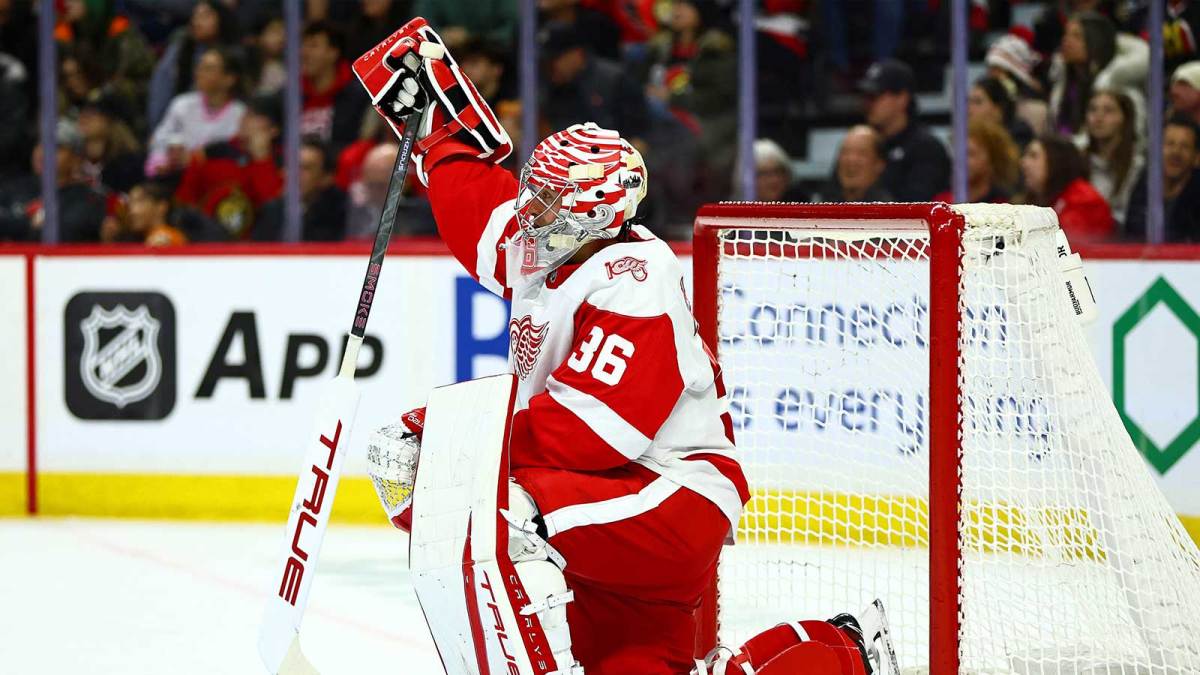
Talbot replaced Gibson to begin the third period and successfully preserved the shutout. The veteran goalie made the necessary saves down the stretch to secure a much-needed win for Detroit as the team continues its push toward the playoffs.
After the game, Red Wings head coach Todd McLellan addressed reporters and provided an update on Gibson’s condition. According to McLellan, the injury appeared to be the result of a painful collision rather than something more serious.
“He got hit in a bad spot, and didn’t feel good after that happened,” McLellan said during the postgame press conference. “He should be fine, I would think.”
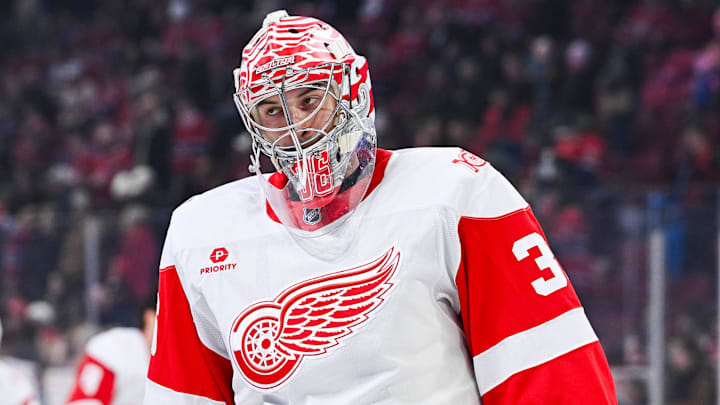
The update came as a significant relief for the Red Wings, who are already dealing with another injury concern. Team captain Dylan Larkin missed the game after suffering an injury in Friday’s matchup against the Florida Panthers. With Larkin sidelined and Gibson briefly forced out of the game, Detroit’s depth and resilience were tested in a crucial moment of the season.
Detroit’s decision to remove Gibson from the game early was also influenced by recent injury concerns. Just last week, the goaltender dealt with what McLellan described as a “stinger,” which forced him to sit out a game. Given that history, the Red Wings opted to take a cautious approach rather than risk worsening the issue.
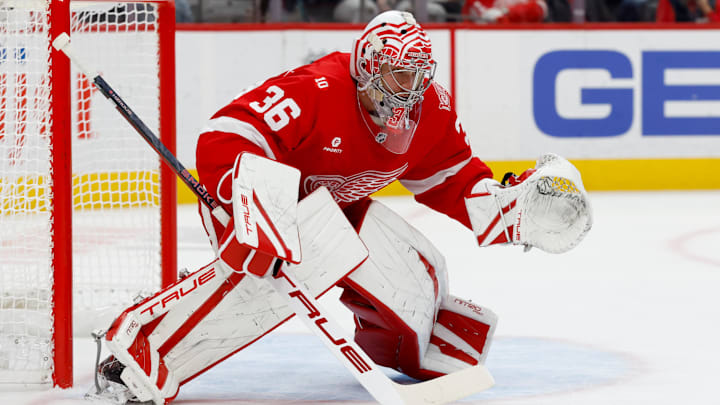
At 32 years old, Gibson has already handled a heavy workload this season. He has started 41 games and has been one of the most important players on Detroit’s roster. Protecting him as the team approaches the final stretch of the regular season is a priority, especially considering how physically demanding March games have historically been for the Red Wings.
Despite the injury scare, Gibson has enjoyed a strong season. In his 41 starts with Detroit, he has posted a 24–13–2 record while maintaining a .907 save percentage and a 2.52 goals-against average. His four shutouts place him among the league leaders and highlight his consistent performance between the pipes.
Gibson’s steady play has been a major factor in Detroit’s resurgence this season. The Red Wings are currently third in the Atlantic Division and hold a six-point advantage over the Columbus Blue Jackets in the race for a playoff spot. If the team maintains its current form, it could reach the postseason for the first time in several years.
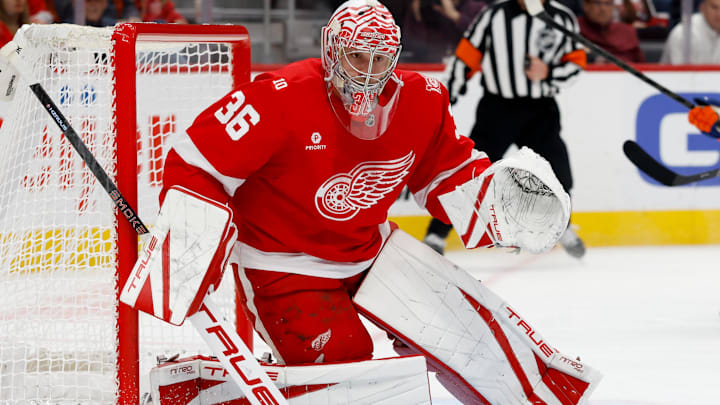
Detroit’s strong position in the standings reflects a broader turnaround for the franchise. After several seasons of rebuilding, the Red Wings are enjoying their most competitive campaign in nearly a decade. Strong goaltending has been one of the key reasons behind that success.
The performance of Cam Talbot further demonstrated the value of Detroit’s goaltending depth. Although the 38-year-old veteran has posted a modest .891 save percentage this season, he remains capable of delivering solid performances when called upon. His ability to step into a high-pressure situation and help finish the shutout highlighted why the team continues to rely on his experience.
Talbot’s role has become increasingly important as the Red Wings manage Gibson’s workload late in the season. With the playoffs potentially on the horizon, Detroit is likely to continue balancing its goaltending rotation to ensure its starter remains healthy and effective.
Behind Gibson and Talbot, the Red Wings also have a promising young goaltender waiting in the wings. Sebastian Cossa has been one of the standout performers in the American Hockey League this season. The young netminder has earned multiple honors, including being named AHL Player of the Month twice and receiving a selection to the AHL All-Star Game. He currently holds the second-best goals-against average in the league, an impressive accomplishment for a developing prospect.
Cossa is widely viewed as Detroit’s goaltender of the future. With Talbot nearing the end of his career, many analysts believe the organization will soon give the young goalie an opportunity to establish himself at the NHL level. Whether that opportunity arrives next season or slightly later remains to be seen, but his development provides the Red Wings with confidence about the long-term stability of the position.
Detroit’s goaltending pipeline does not stop there. The organization has continued investing in developing young netminders, giving the franchise multiple potential options for the future. That depth is an encouraging sign for a team aiming to build sustainable success rather than relying on short-term solutions.
For now, the Red Wings are focused on maintaining their momentum in the standings while managing the health of their key players. Gibson’s early exit served as a reminder of how quickly circumstances can change during the long NHL season, but the team’s response showed its growing maturity and depth.
If Gibson returns to full health quickly, Detroit will remain well-positioned for a strong finish to the season. Combined with the reliability of Talbot and the promise of Cossa, the Red Wings appear to have built a goaltending structure capable of supporting both their current playoff push and their long-term ambitions.
The victory over the Devils may ultimately be remembered not only for the shutout but also for the way Detroit’s depth carried the team through a potentially troubling moment. With the postseason race heating up, that kind of resilience could prove invaluable for the Red Wings in the weeks ahead.