Former Texas Longhorns wide receiver Johntay Cook II is returning to the Southeastern Conference after committing to the Ole Miss Rebels, marking a significant development for a player whose collegiate career has included multiple stops and a winding path through the transfer portal. Cook, who began his career as one of the nation’s top high school prospects, initially made headlines when he chose Texas out of DeSoto High School in Texas, where he was rated as a five-star recruit and one of the top wide receivers in his class. His arrival at Texas carried high expectations, and he entered the Longhorns’ roster with the potential to make an immediate impact.
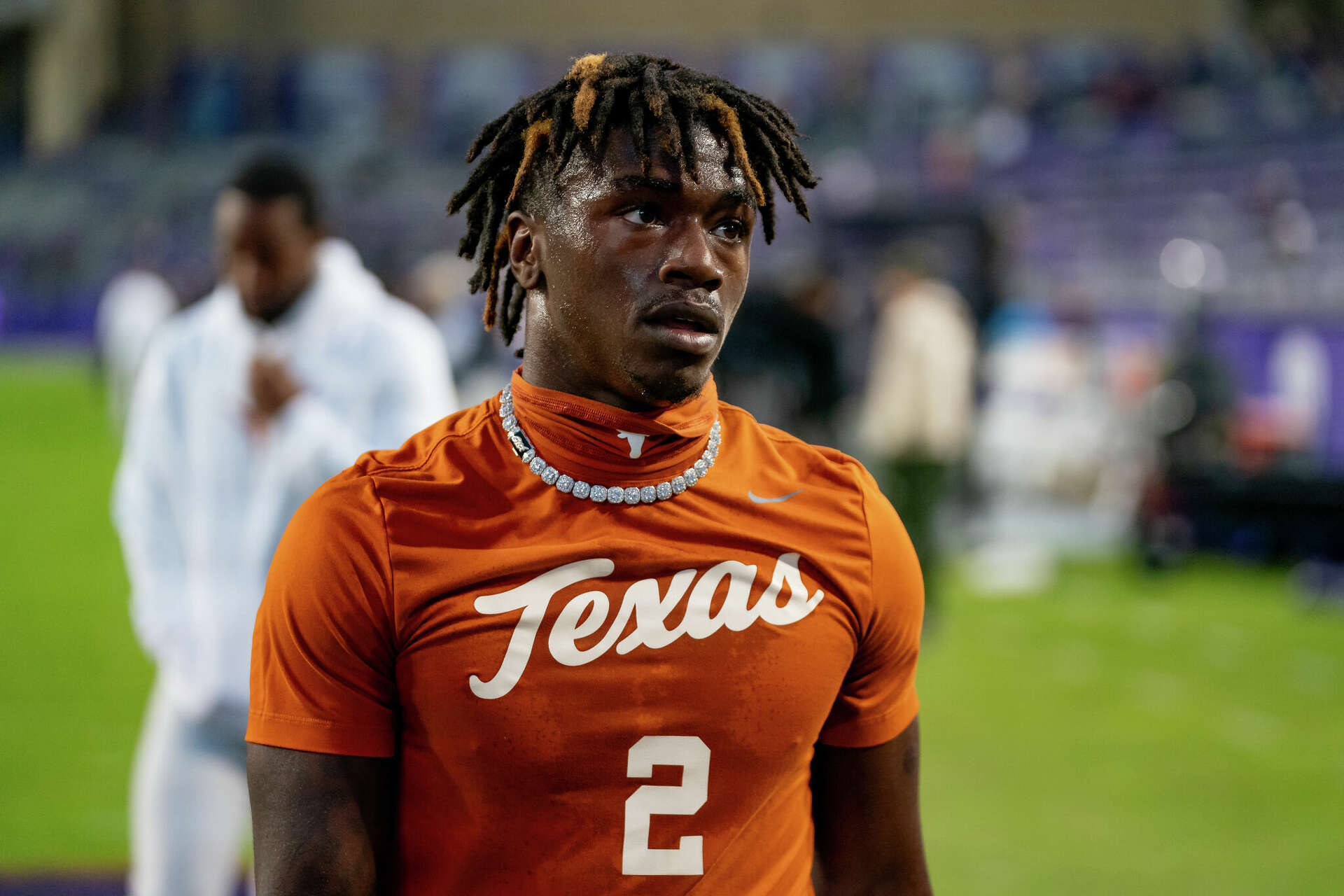
During his first two seasons at Texas, Cook appeared in 18 games, recording 32 receptions for 273 yards and two touchdowns. While those numbers did not fully meet the lofty expectations that accompanied his recruitment, Cook showed flashes of the playmaking ability that had made him a five-star prospect. His ability to stretch the field, make contested catches, and contribute in big moments was evident even in a Texas offense that faced challenges in consistency and quarterback play during his tenure. Despite showing potential, Cook ultimately sought a fresh start and entered the NCAA transfer portal following the 2024 season in search of a more favorable environment for playing time and development.

Cook initially committed to the University of Washington, but that opportunity was short-lived, as he departed the program after less than a month. His brief stay there added an unexpected twist to his career trajectory and raised questions about where he would land next. Eventually, Cook committed to Syracuse University, where he joined the Orange for the 2025 season. At Syracuse, Cook saw an increase in opportunity and playing time, appearing in 12 games and recording 45 receptions for 549 yards and two touchdowns. His production at Syracuse represented a significant step forward in demonstrating his ability to contribute as a reliable offensive weapon, particularly in contested situations and in moving the chains for his team.
Cook’s performance in Syracuse’s offense, combined with his prior experience at Texas, quickly generated renewed interest from programs in the SEC. As he evaluated his options in the transfer portal for the 2026 season, it became clear that a return to the SEC could provide the platform he needed to compete at the highest level of college football and showcase his full potential. Ultimately, Cook committed to Ole Miss, joining a roster that has been actively rebuilding and bolstering its depth through the transfer portal. His addition to the Rebels aligns with head coach Pete Golding’s strategy of strengthening the receiving corps and providing quarterback options with talented, experienced targets.

Offensively, Cook’s skill set fits well within Ole Miss’s scheme. He brings size, athleticism, and versatility to the receiving group, with the ability to line up both outside and in the slot. Cook’s route-running, ability to gain yards after the catch, and capacity to make contested catches offer the Rebels a weapon who can create matchup problems for opposing SEC defenses. In a conference renowned for speed, athleticism, and defensive depth, Cook’s experience in high-pressure situations and prior exposure to SEC-level competition will help him adapt quickly and contribute effectively.

For Ole Miss, the addition of Cook represents more than just a roster upgrade; it is part of a broader strategy to reload the team after turnover in recent seasons. The Rebels have added multiple transfers and incoming recruits to complement returning players, aiming to field a balanced, competitive roster capable of contending in the SEC West. Cook’s presence provides an immediate boost in experience and talent, particularly in a receiving corps that benefits from players with the ability to stretch the field and create big plays.
For Cook himself, the move to Ole Miss represents both a fresh start and a return to familiar territory. Having begun his collegiate career in the SEC at Texas, he is already familiar with the level of competition and the demands of the conference. The combination of his prior experience, his productive season at Syracuse, and the opportunities available in Ole Miss’s offense positions him to make an immediate impact. His journey, which has included multiple transfers and program changes, highlights both the challenges and opportunities that modern college athletes navigate in an era of increased mobility and player agency.

Cook’s presence on the Ole Miss roster will give quarterback Deuce Knight another reliable option in the passing game. With the Rebels’ offense aiming to compete at a high level against some of the nation’s top defenses, having a receiver like Cook who can execute precise routes, maintain focus under pressure, and make contested catches will be invaluable. His ability to contribute in both intermediate and deep passing scenarios gives Ole Miss additional flexibility in game planning, allowing the coaching staff to create mismatches and exploit defensive weaknesses.
In addition to his on-field abilities, Cook’s journey underscores the evolving landscape of college football, where the transfer portal has become an essential tool for programs seeking to address immediate roster needs and for players seeking environments that maximize their opportunity and development. Cook’s path from five-star recruit to Texas, to brief commitment at Washington, to productive season at Syracuse, and finally back to the SEC with Ole Miss illustrates the potential of the portal to reshape careers and provide players with the chance to find a team that fits their skills and goals.
Fans of Ole Miss will be watching Cook closely as he integrates into the program. Expectations are that he will compete for immediate playing time and contribute as a dynamic option for the Rebels’ passing attack. The combination of his size, athleticism, and prior experience at both Texas and Syracuse positions him as a player who can make a difference early, while also providing leadership and mentorship to younger receivers on the roster.
As the 2026 season approaches, Cook’s impact will be measured by his ability to adapt to Ole Miss’s offensive system, contribute in critical situations, and help elevate the team in an increasingly competitive SEC. With his blend of talent, versatility, and prior experience, he has the potential not only to improve the Rebels’ receiving corps but also to emerge as one of the more compelling stories in college football this season, illustrating how perseverance and adaptability can lead to success in a rapidly evolving sport.