

Cubs Free-Agent Target Ryan Helsley Signs Two-Year Deal With Rival Club
The Chicago Cubs saw one of their key offseason pitching targets come off the board on Monday, as All-Star reliever Ryan Helsley agreed to a two-year contract with a rival club—closing the door on any hopes the Cubs had of adding the flame-throwing closer to their bullpen. Helsley, who hit the free-agent market for the first time in his career this winter, had been connected to Chicago in multiple reports due to the team’s desire for a high-leverage arm capable of stabilizing the back end of the bullpen.
The Cubs entered the offseason with a clear objective: strengthen a pitching staff that showed promise but lacked consistency late in games. Helsley, known for his triple-digit fastball and shutdown stuff, was viewed internally as a potential game-changing acquisition. But despite Chicago’s interest, the market moved quickly, and Helsley’s eventual deal—valued higher than many early projections—proved too steep for the Cubs’ comfort level.
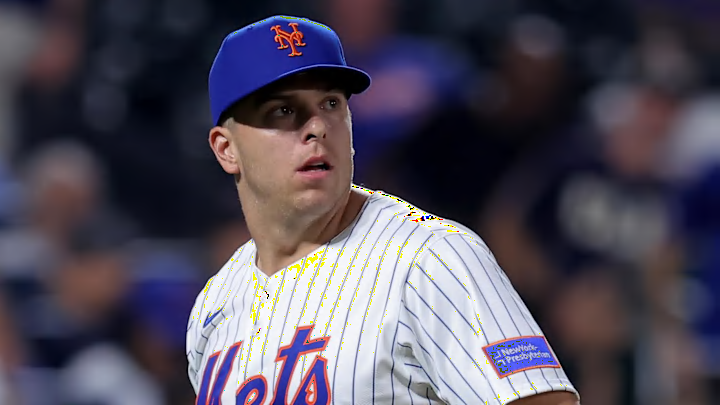
Chicago had monitored Helsley’s market from the outset, believing he represented not only a bullpen upgrade but a potential closer capable of shifting their entire late-inning structure. With Adbert Alzolay struggling with injuries and inconsistency last year, and with no true ninth-inning certainty on the roster, Helsley was seen by many insiders as the type of addition that could transform the Cubs from fringe contenders into legitimate threats in the National League Central.
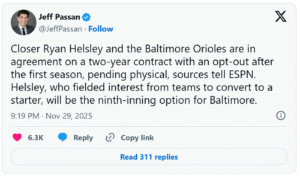
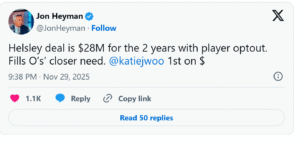
But once rival teams began aggressively pursuing relievers, the price for reliable back-end arms surged. Helsley, who delivered a strong 2024 season and has long been considered one of the hardest throwers in baseball, quickly emerged as one of the most in-demand pitchers on the market. As negotiations intensified, the Cubs were outbid by a club more willing to offer guaranteed years and a notably higher annual value. While the Cubs remained involved deep into the process, the front office ultimately declined to match the final offer.
The two-year agreement Helsley landed reflects a wider trend across MLB: dependable relievers are finding multi-year deals far more attainable as teams prioritize bullpen depth and postseason durability. With the modern game emphasizing matchups, velocity, and bullpen versatility, the value of a proven closer has never been higher. Helsley’s experience, dominant stretches, and playoff-caliber stuff made him one of the offseason’s more attractive relief options, and teams acted accordingly.
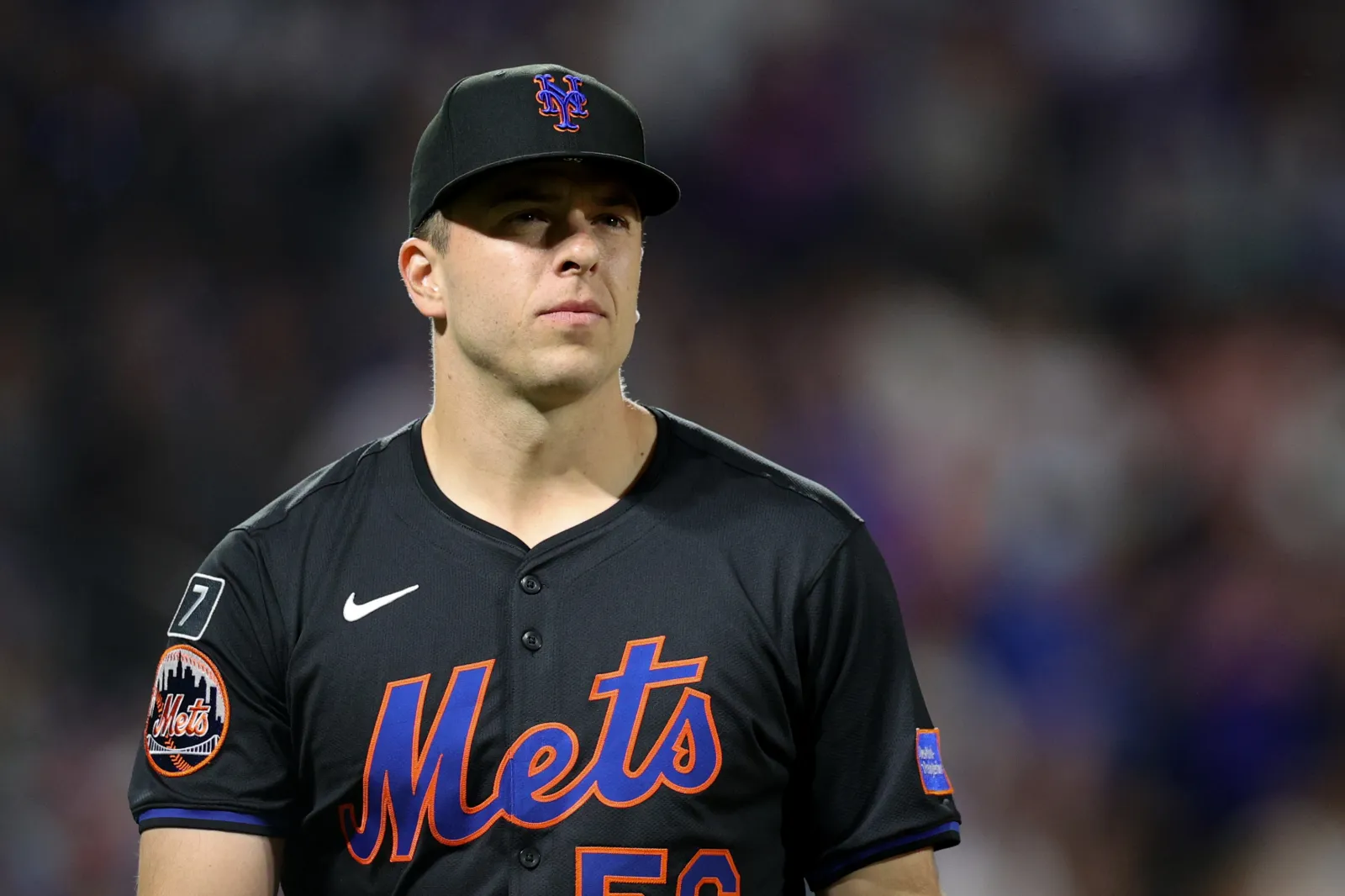
For the Cubs, missing out on Helsley forces a significant recalibration of their offseason pitching strategy. Chicago still has multiple holes to fill—not just in the bullpen, but in the rotation and lineup as well. While the front office has expressed confidence in its internal arms, including young relievers like Daniel Palencia, Luke Little, and Keegan Thompson, the organization also recognizes the need for a more experienced late-inning presence.
The Cubs’ bullpen last year was one of the most inconsistent in the National League, often collapsing during key stretches and placing heavy pressure on the rotation to carry the load. The lack of a dependable closer led to blown leads, lost momentum, and ultimately a missed postseason berth. Helsley, whose power fastball and swing-and-miss slider can dominate hitters in any situation, was seen as a clear solution to that problem.
Now that he is off the board, Chicago will turn its attention to several alternative options still available. Veterans such as Robert Stephenson, Jordan Hicks, and Andrew Chafin remain intriguing possibilities. The trade market also offers potential fits, with teams like the Guardians, Marlins, and Athletics reportedly open to dealing relief arms. The Cubs have the prospect depth to acquire a controllable closer, but the front office must weigh the long-term cost of parting with young talent.
The missed opportunity with Helsley also adds pressure on the Cubs to upgrade elsewhere on the roster. Beyond the bullpen, they are still seeking a middle-of-the-order bat, additional rotation depth, and potentially help at third base or first base. Chicago’s offseason has been methodical rather than aggressive, but losing out on a top target like Helsley may force the front office to push harder in upcoming negotiations.
Still, the Cubs are far from panicking. Team officials have emphasized patience and smart value this winter rather than overspending out of desperation. With several months remaining before Spring Training, Chicago is expected to remain active and explore multiple paths to improve the roster.
From Helsley’s perspective, the decision to sign elsewhere was influenced by a combination of contract length, financial security, and immediate playoff potential. The rival club that landed him offered not only a competitive deal, but also a defined role and a roster built to compete deep into October. For a reliever with Helsley’s high-velocity profile—one that has historically come with durability concerns—the security of a multi-year offer was significant.

The Cubs’ front office had been hesitant to commit multiple years to a reliever with a high-risk injury profile, especially given the volatility of bullpen arms. That caution ultimately created the gap that the signing team exploited.
Even without landing Helsley, the Cubs believe they have a strong foundation for 2025. The rotation remains anchored by Justin Steele and Shota Imanaga, with young arms pushing for prominent roles. The lineup features a mix of rising stars and steady veterans. And with a substantial amount of payroll flexibility still available, Chicago remains capable of making a splash at any point this offseason.
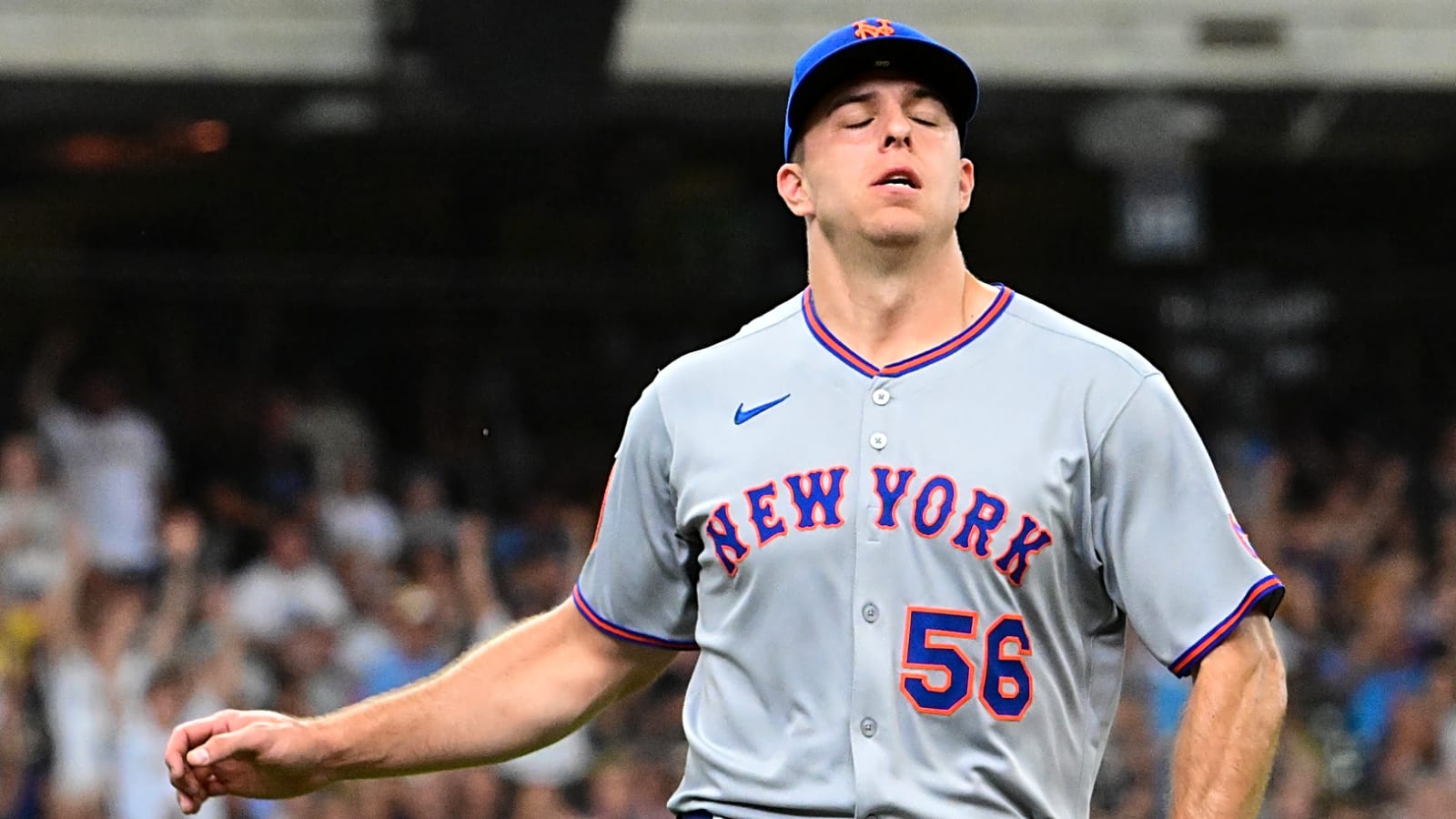
Still, losing out on Helsley stings. He was one of the few relievers on the market with closer-caliber stuff, postseason experience, and a track record of dominance when healthy. His presence in the ninth inning would have given the Cubs a level of bullpen certainty they have been lacking since the prime years of Craig Kimbrel.
As the offseason progresses, the Cubs’ ability to pivot from this missed opportunity will help determine whether they enter the 2025 season as true contenders or as a team still searching for the pieces needed to compete. For now, the hunt for late-inning help continues—and the pressure to deliver another impact addition has only grown stronger.