

The Toronto Blue Jays have quietly made building catching depth one of their under-the-radar objectives heading into the 2026 season. While the team’s pennant-winning catching tandem remains intact, the front office has been proactive in preparing for multiple contingencies that could arise during a long, 162-game schedule. Alejandro Kirk, the team’s primary starter behind the plate, and Tyler Heineman, the experienced backup, are expected to retain their roles to start the season. Kirk, still in his prime and a key contributor to Toronto’s offensive and defensive output, provides stability at the position. Heineman, meanwhile, has proven over his career that he can step in and provide reliable defense and occasional offensive sparks, but there is some concern regarding his ability to maintain last season’s production over a full campaign, given his age and historical performance trends.

Heineman posted a notable 1.9 bWAR in the previous season, bringing his career total to 2.6 at age 34. While this was a strong showing for a backup catcher, the organization appears to be preparing for potential regression. This is particularly important because catching is a physically demanding position, and over the course of a long season, even veteran players can experience wear and tear that impacts both defensive efficiency and offensive output. Toronto’s proactive approach to catching depth demonstrates a forward-thinking philosophy: they are not waiting until an injury or slump occurs to address the need for capable backups; instead, they are building organizational depth now, anticipating challenges before they arise.

The Blue Jays have a catching prospect they believe in: 25-year-old Brandon Valenzuela. Valenzuela is seen as a high-upside player who could, with continued development, become a reliable contributor at the major league level. He has spent time honing his skills in the minors, working on both defensive mechanics and plate discipline. While he is not yet a lock for a major-league roster spot, the organization clearly views him as a significant piece of their future plans. Valenzuela’s development, combined with the experience of Kirk and Heineman, gives Toronto a mix of youth and veteran presence behind the plate, providing flexibility should adjustments be needed over the course of the season.
Beyond their internal prospects, the Blue Jays have also brought in a number of non-roster invitees for spring training. Many of these players signed minor-league contracts with Toronto this year and are being given an opportunity to compete for roster spots or at least impress the coaching staff with their potential contributions. Spring training is a critical time for evaluating these players, as it provides a controlled environment to assess defensive skills, game-calling ability, arm strength, and offensive production. While few non-roster invitees ultimately make a major-league roster out of camp, they play an important role in organizational depth and can provide insurance against injury or underperformance by other players.
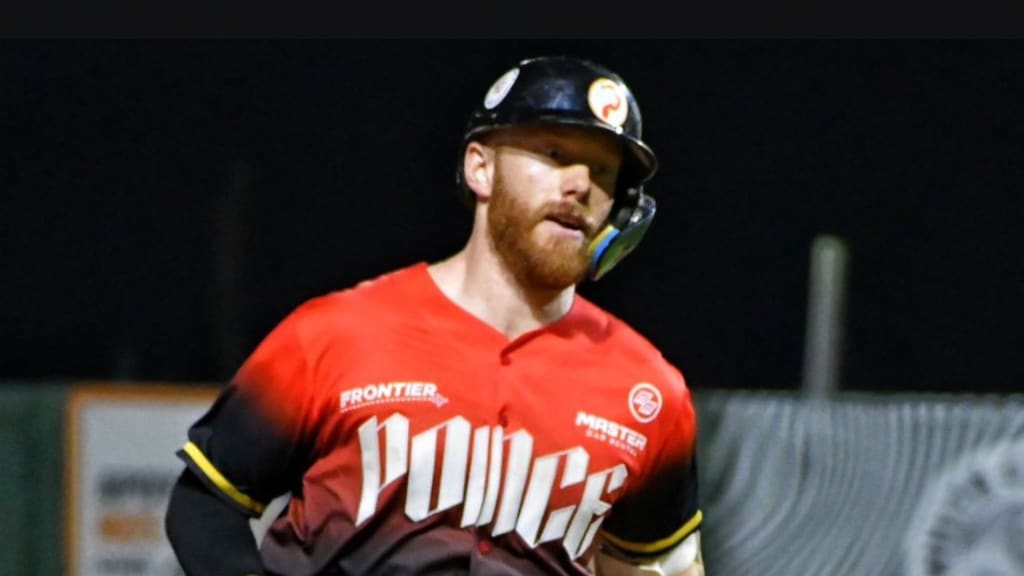
Just before spring training officially began, the Blue Jays added one more backstop to their organizational depth chart: 29-year-old William Simoneit. Simoneit signed a minor-league contract, a move that was formalized on a Friday but did not appear on the official transactions log until the following Tuesday. His addition reflects Toronto’s commitment to ensuring that they have multiple options behind the plate and are not relying solely on established veterans and prospects. Simoneit is not being viewed as an immediate major-league contributor, but rather as a depth piece who can provide experience and flexibility within the minor-league system.

Simoneit brings a diverse minor-league background to the organization. He has four years of experience in affiliated professional baseball, having spent time in the Athletics, Philadelphia Phillies, and Chicago Cubs organizations. Over the course of 302 minor-league games, he compiled a .246/.343/.397 slash line, with 27 home runs and 153 RBIs. While these numbers do not jump off the page as elite, they demonstrate that he can contribute offensively at the minor-league level, and his experience across multiple organizations suggests a player who has faced a variety of pitching and competitive environments. At the end of spring training last year, the Cubs released him, and he spent the remainder of the season in the independent Atlantic League, a common path for players trying to regain attention from affiliated clubs.
Defensively, Simoneit has been a primary catcher for the majority of his career. Although he has occasionally seen time at first base, particularly in some minor-league seasons where playing time was shared with other players, he has largely remained behind the plate since 2023. This focus on catching indicates that Toronto views him as a true backstop who can handle pitching staffs and manage the game, even if he is not expected to see significant time at the major-league level in the immediate future.
Simoneit’s presence on the roster creates interesting possibilities for spring training. While he likely ranks fourth or fifth on the depth chart of catching newcomers at the start of the spring, baseball is unpredictable, and strong offensive performance or an injury elsewhere could quickly elevate his standing. In a position where depth is always valued, having a player like Simoneit compete in camp can push other players to perform better and provides insurance against unforeseen circumstances. While he is considered a long shot to make his major-league debut with Toronto this year, his inclusion in the organization is strategically sound from a roster management perspective.
This focus on depth is particularly important for the Blue Jays given the physically demanding nature of catching. Catchers are constantly involved in the game, not only handling pitchers and framing pitches but also blocking balls in the dirt and managing the mental aspects of the game. Injuries to catchers are not uncommon, and even when they remain healthy, fatigue can impact both offensive and defensive performance. By adding multiple layers of depth, including established veterans, prospects, non-roster invitees, and players like Simoneit, Toronto is mitigating the risk of being thin at a position that can often be a team’s Achilles’ heel.
Additionally, Toronto’s approach reflects a broader organizational philosophy of planning for contingencies. While the team has a strong starting catcher in Kirk and a proven backup in Heineman, relying solely on two players could be risky over a long season. By bringing in multiple options, the Blue Jays ensure that they can weather injuries, slumps, or regression without having to scramble in-season to fill a critical role. This proactive approach demonstrates the organization’s commitment to long-term competitiveness and roster stability, rather than simply reacting to problems as they arise.

Simoneit’s signing, along with the presence of Valenzuela and other non-roster invitees, ensures that the Blue Jays enter spring training with a robust catching group. While most of the newcomers are unlikely to see major-league action this season, they provide internal competition, developmental opportunities, and organizational insurance. Toronto’s coaching staff can use spring training to evaluate each player’s skills, assess their defensive and offensive abilities, and determine who is best positioned to contribute at the major-league level if circumstances demand.
Ultimately, the Blue Jays’ strategy is one of caution, foresight, and depth-building. By adding multiple layers of catching talent, they are preparing for a variety of scenarios that could play out over the course of a long season. Alejandro Kirk and Tyler Heineman remain the core of the catching unit, but with Brandon Valenzuela, William Simoneit, and other minor-league and non-roster players in the mix, Toronto has the resources to navigate injuries or underperformance without compromising competitiveness. Even if Simoneit does not make a major-league debut this year, his presence strengthens the organization and reflects a thoughtful, forward-looking approach to roster construction.
In conclusion, the Toronto Blue Jays’ offseason moves behind the plate illustrate a proactive approach to roster management and depth creation. By signing William Simoneit, developing Brandon Valenzuela, and inviting multiple non-roster catchers to spring training, the organization has created a safety net for one of baseball’s most demanding positions. While the chances of Simoneit contributing in the majors this year are slim, his addition ensures that the team is prepared for a wide range of scenarios, giving Toronto both immediate flexibility and long-term insurance. This layered strategy demonstrates that the Blue Jays are committed to maintaining high performance at every position and are willing to invest in depth to protect their chances for sustained success.