The Philadelphia Phillies have already made significant progress in addressing key priorities during the offseason, positioning themselves for another competitive run in 2026. According to sportswriter Reuter, the team has successfully crossed off most of the items on their offseason to-do list, beginning with the re-signing of slugger Kyle Schwarber. Schwarber, who has been a central figure in the Phillies’ lineup over the past few seasons, provides the team with both power and veteran leadership. Securing his return was a critical first step for the front office, ensuring that the middle of the lineup retains a proven run producer capable of impacting games both at Citizens Bank Park and on the road.

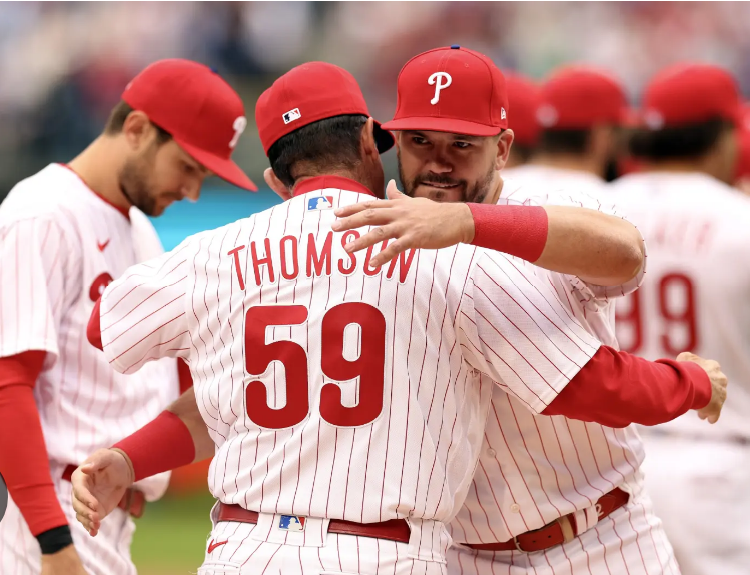
In addition to locking up Schwarber, the Phillies have strengthened their outfield by acquiring Adolis García. García, known for his combination of power, defensive versatility, and speed, is expected to provide a much-needed boost to a unit that struggled at times last season. His addition gives manager Rob Thomson more flexibility in setting lineups and allows the team to maintain balance between offensive firepower and defensive stability in the outfield corners. On the pitching side, Philadelphia has also secured Brad Keller on a multi-year deal. Keller, a right-handed starter and former closer, adds depth and consistency to the rotation, and his presence should help stabilize a pitching staff that has been inconsistent at times in recent seasons. These moves collectively signal a front office committed to maintaining a strong core while addressing weaknesses from the prior season.

Despite these accomplishments, one major question remains unresolved: the future of J.T. Realmuto as the team’s starting catcher. Realmuto has long been regarded as one of the top catchers in Major League Baseball, offering a rare combination of offensive production, defensive acumen, and the ability to manage a pitching staff effectively. He was instrumental in Philadelphia’s successes in recent seasons, providing both leadership behind the plate and clutch performances at the plate. However, Realmuto is no longer in the absolute prime of his career, and this has raised questions about the type of contract he might command this offseason.

If Realmuto ultimately chooses to sign elsewhere, the Phillies face a critical challenge. The organization currently lacks an internal replacement capable of replicating his impact. Victor Caratini, Jonah Heim, and Elias Díaz are all competent catchers, but none offers the combination of offensive output, pitch framing, and game-calling skills that Realmuto provides. As a result, Philadelphia would likely need to pivot quickly, either promoting one of these options as the everyday starter or exploring the trade market to acquire a catcher capable of filling the void. The decision regarding Realmuto could have ripple effects across the roster, influencing not only the lineup but also the development plans for younger players in the organization.
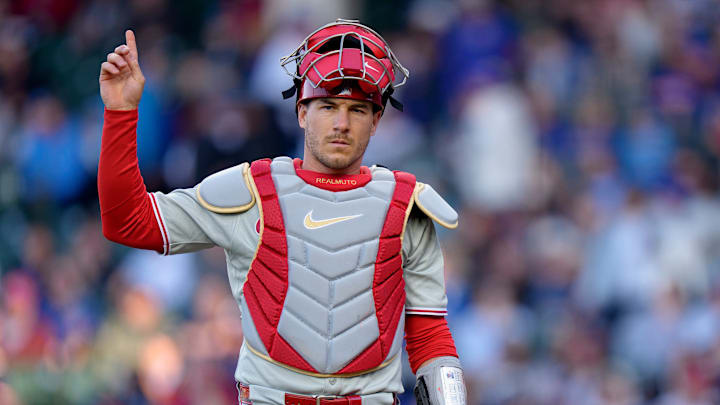
From the player’s perspective, Realmuto is coming off another strong season, and while he may not command as large a contract as his previous deal, he remains a highly valuable asset. Catching production of his caliber is difficult to find on the open market, and teams in search of a top-tier catcher will likely compete for his services if he enters free agency. For the Phillies, securing Realmuto for an additional two or three years would ensure that the team retains one of the most impactful players in their lineup, allowing them to capitalize on the remainder of his peak years. Such a deal would also provide stability behind the plate, a crucial factor for managing the pitching staff effectively over the course of a long season.
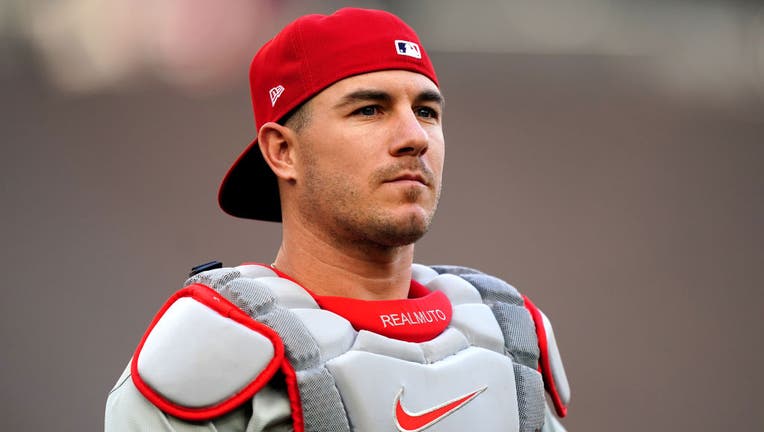
The stakes for Philadelphia extend beyond individual performance. Catchers play a unique role in baseball, acting as both strategists and communicators on the field. A top-level catcher like Realmuto helps pitchers perform at their best by calling games intelligently, framing pitches effectively, and providing leadership during high-pressure moments. Losing a player of his caliber would not only affect the offensive lineup but could also impact the effectiveness of the entire pitching staff. This underscores why the Phillies have prioritized re-signing him and why they are reportedly open to a mid-length contract that aligns with both the team’s long-term plans and Realmuto’s career stage.
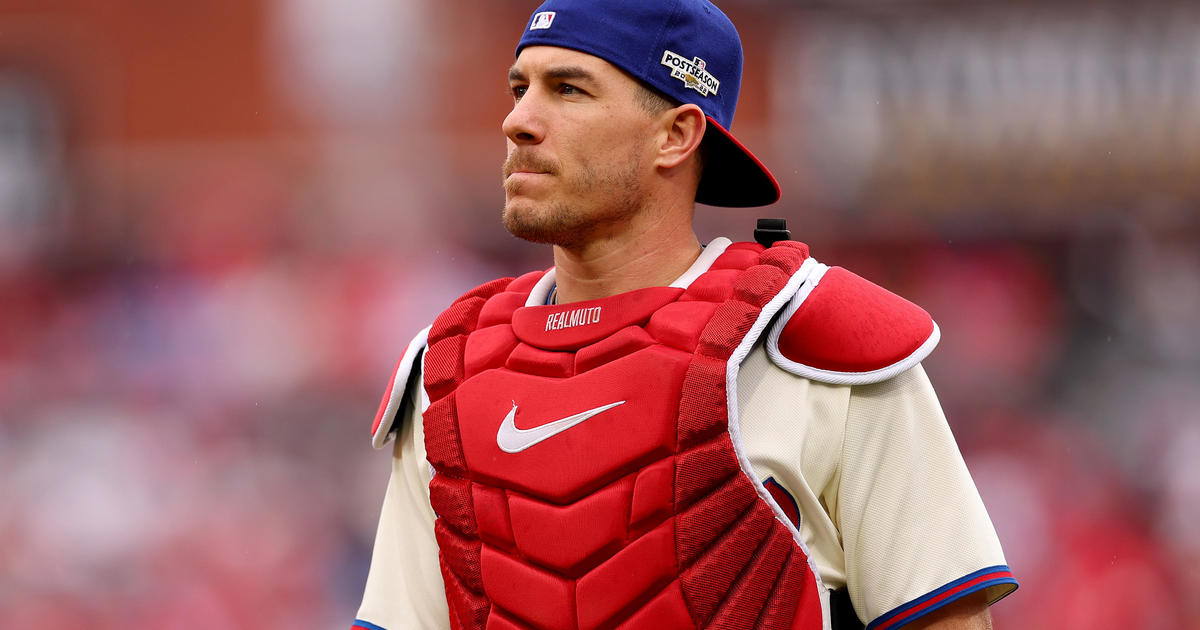
Analysts and fans alike recognize the difficulty in replacing a player like Realmuto. While there are competent backup options on the roster, none of them combine power, on-base skills, and defensive excellence in a way that would seamlessly maintain the team’s competitive edge. As a result, many experts expect the Phillies to make a concerted effort to retain him. Even if negotiations take time or involve creative contract structures, the organization understands the potential cost of losing one of baseball’s premier catchers. For a team that has recently competed at the highest levels, maintaining continuity in key positions is essential, and Realmuto’s presence represents one of the most important pieces of that continuity.
The Phillies’ approach to this offseason highlights a broader strategy of balancing immediate competitiveness with long-term sustainability. By re-signing Schwarber, adding García, and securing Keller, the team has addressed pressing needs while also leaving room to manage payroll strategically. The situation with Realmuto fits within this framework: the team must weigh the value of keeping a star player against the constraints of the budget, while also considering the implications for future seasons. A thoughtful, measured approach to this decision could determine whether the Phillies remain contenders in the National League East in the coming years.
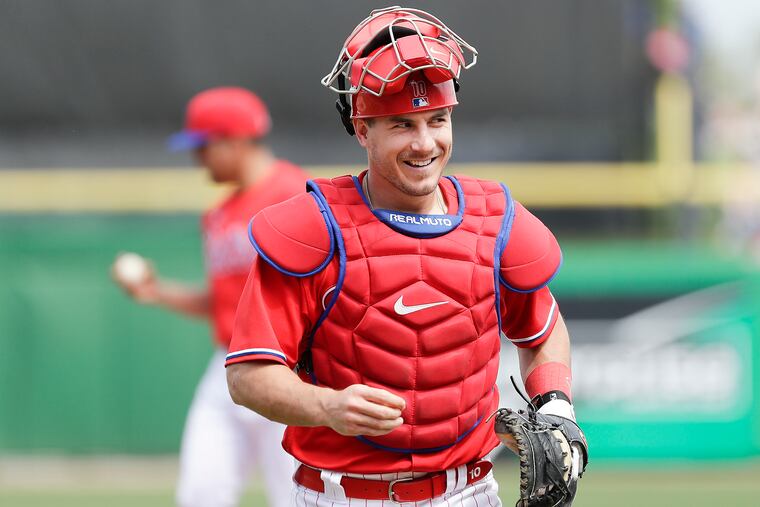
From a fan perspective, Realmuto’s potential return is one of the most anticipated developments of the offseason. His combination of athleticism, baseball IQ, and leadership has made him a fan favorite, and many supporters are eager to see him remain in Philadelphia. Social media and sports forums have been filled with speculation about his next move, ranging from confidence that he will re-sign to curiosity about which other teams might offer a compelling opportunity. The uncertainty surrounding his future has also sparked broader discussion about the Phillies’ overall roster construction and the strategies they are pursuing as they aim to compete for a championship.

The Phillies’ contingency planning is also worth noting. By identifying Caratini, Heim, and Díaz as potential alternatives, the team demonstrates that it is preparing for multiple outcomes. While these options may not fully replicate Realmuto’s impact, they provide flexibility in the event that negotiations do not result in a re-signing. Additionally, the organization could explore trades or minor-league promotions to supplement these options, ensuring that the team is not left vulnerable at the catcher position. This careful preparation highlights the front office’s awareness of the stakes and its commitment to maintaining competitiveness regardless of the offseason’s twists and turns.
In conclusion, the Phillies have made significant strides this offseason, addressing major priorities with strategic signings and acquisitions. Kyle Schwarber’s re-signing, the addition of Adolis García, and the multi-year deal for Brad Keller all reflect a team focused on remaining competitive. However, the question of J.T. Realmuto’s future looms as the most important unresolved issue. His value to the roster is immense, both offensively and defensively, and finding a replacement of comparable impact would be extremely difficult. For Philadelphia, securing Realmuto on a two- or three-year deal would preserve one of their most important assets and provide stability at a critical position. As the offseason continues, all eyes will be on negotiations, with the understanding that Realmuto’s decision could shape the Phillies’ 2026 season and beyond.