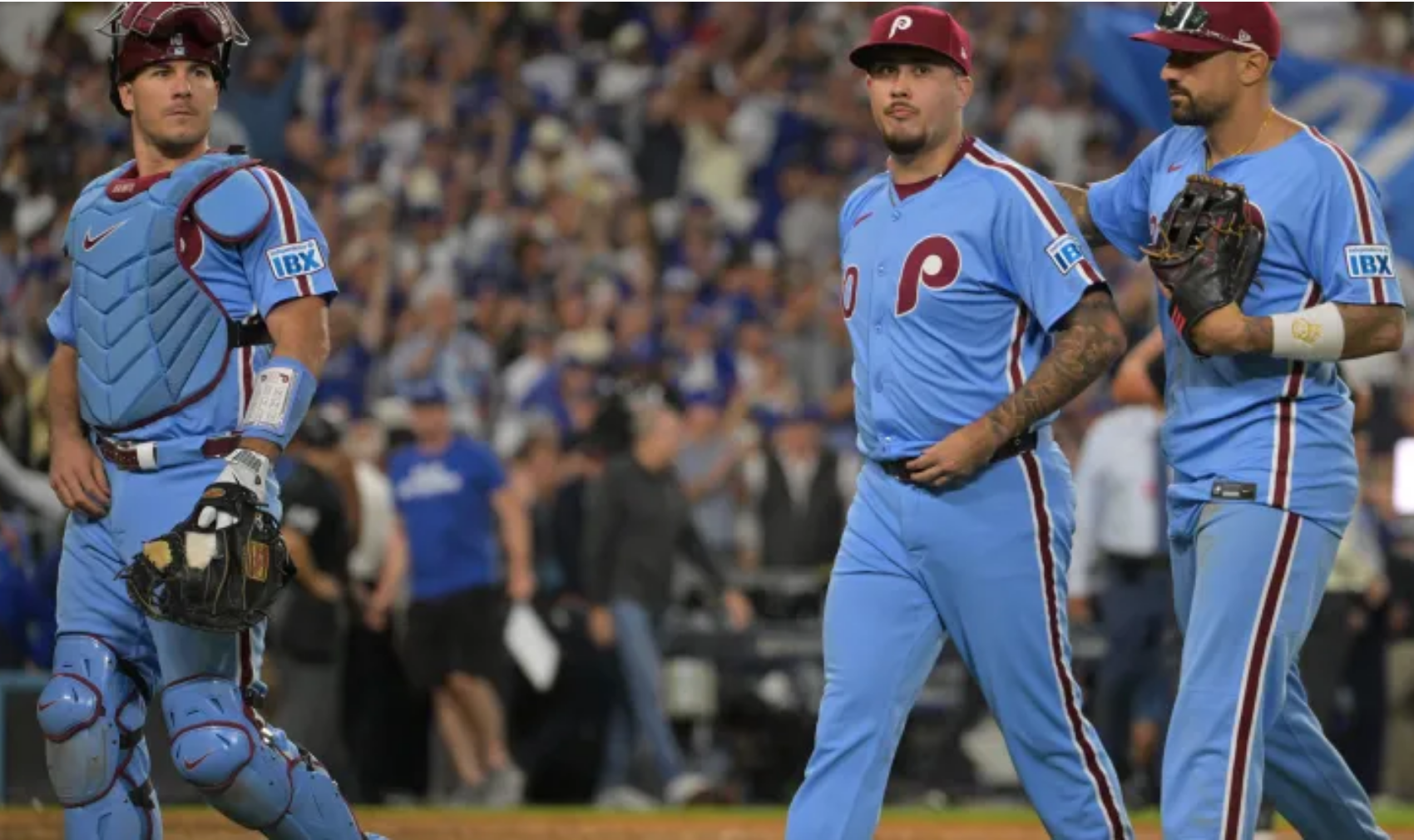

After the Philadelphia Phillies made the decision to move on from Matt Strahm, one of the most dependable left-handed relievers in their bullpen, the ripple effects were felt almost immediately across the roster. Strahm had become a trusted late-inning option, capable of neutralizing tough left-handed hitters and pitching in high-leverage spots when games tightened. His departure left a clear void, and the Phillies entered the next phase of the offseason knowing that rebuilding bullpen depth, particularly from the left side, would be essential if they wanted to remain contenders.
The initial response was to reshuffle responsibilities internally. Brad Keller, brought in with the expectation that he could handle bigger moments, was positioned to step into a role similar to the one Strahm previously occupied. While Keller is right-handed and brings a different look, the coaching staff believes his durability and experience can help stabilize the bridge between the starters and the closer. Still, relying too heavily on right-handed relievers was never going to be a sustainable solution, especially in a division filled with dangerous left-handed bats. That reality made adding left-handed depth more than a luxury—it became a necessity.

Philadelphia’s front office moved quickly to address that need by trading for Kyle Buckhus, a left-handed reliever viewed as a useful depth piece with upside. Buckhus does not arrive with the same name recognition Strahm had earned, but the Phillies see value in his ability to get outs against left-handed hitters and handle middle-to-late innings when matchups call for it. His acquisition signaled that the team was committed to rebuilding balance in the bullpen rather than simply plugging holes with whoever was available.

More recently, the Phillies added another left-handed reliever to the roster, further emphasizing their focus on depth rather than a single headline move. This addition fits a broader organizational philosophy that has taken shape over the past few seasons. Instead of pouring resources into one expensive reliever, the Phillies prefer to build a bullpen with multiple interchangeable arms, allowing competition and performance to dictate roles once the season begins. For a team with postseason aspirations, having several capable left-handers available provides flexibility not just over a long regular season, but also in October, when matchups are magnified and every pitch matters.

The loss of Strahm also changes how manager Rob Thomson will manage games. With Strahm, the Phillies had a left-hander they could deploy confidently against the heart of an opposing lineup, regardless of inning. Without him, Thomson will likely rely more heavily on situational matchups, using a combination of Keller and the newly added left-handers to piece together those critical outs. While this approach requires more moving parts, it can also make the bullpen less predictable for opposing teams.
Another factor driving the Phillies’ bullpen strategy is durability. Strahm had proven he could handle a heavy workload, something not every reliever can manage. By adding multiple left-handed arms, the Phillies are spreading that workload across several pitchers, reducing the risk of burnout or injury over the course of the season. This depth becomes especially important during stretches with limited off days, when bullpen arms are asked to pitch on consecutive nights.

There is also an element of internal competition at play. With Buckhus and the recently added left-hander now in the mix, no bullpen spot is guaranteed beyond the top tier. Younger relievers and fringe roster arms will be pushed to perform, knowing that the team has alternatives available. That competition can raise the overall level of the bullpen, something the Phillies have prioritized as they try to take the next step from playoff team to championship contender.
Financial flexibility cannot be ignored either. By opting for trades and lower-cost additions rather than one big signing, the Phillies preserve resources that can be used elsewhere, whether at the trade deadline or in future offseasons. This approach also limits long-term risk, as bullpen performance can fluctuate dramatically from year to year. Shorter commitments and depth-based strategies allow the team to adapt quickly if a particular move does not pan out.

As the roster currently stands, the Phillies’ bullpen looks different than it did when Strahm was still in the fold, but not necessarily weaker. Instead, it is more layered, with defined roles still forming and plenty of room for pitchers to earn trust as the season progresses. Keller’s transition into a more prominent setup role will be closely watched, as will the performance of the new left-handed additions who are being asked to collectively replace what Strahm once provided on his own.
Ultimately, the Phillies are betting that depth, flexibility, and matchup-driven management can offset the loss of a single high-impact reliever. While Strahm’s absence will be felt, especially early on, the front office believes that a diversified bullpen gives the team a better chance to withstand the ups and downs of a long season. If even one of the newly added left-handers emerges as a reliable option in high-leverage moments, the Phillies’ approach will look far more calculated than cautious.

As spring training approaches, much of the attention will be on how these pieces fit together and which arms separate themselves from the pack. What is clear is that the Phillies recognized the importance of addressing their bullpen quickly after trading Strahm, and they have taken deliberate steps to ensure that left-handed relief pitching remains a strength rather than a weakness. In a division and league where small edges can make a big difference, that attention to detail could prove critical when the games matter most.