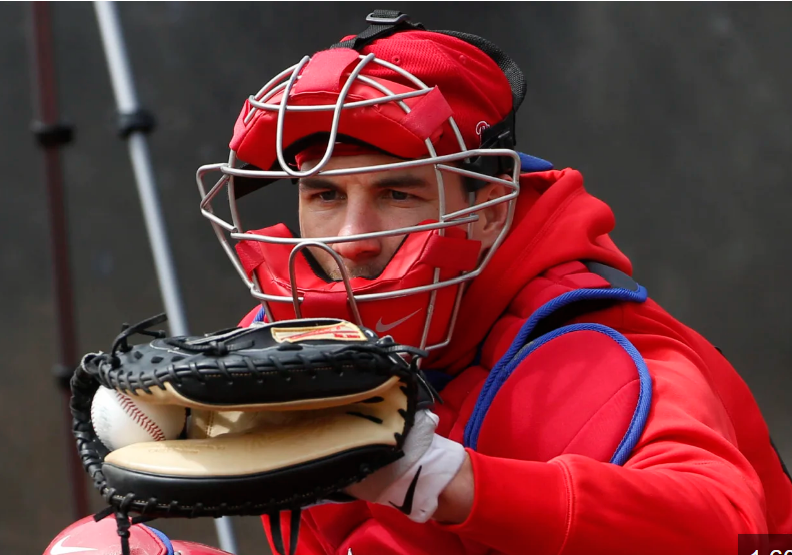
The Philadelphia Phillies made one of their most consequential roster decisions of the offseason just days before Christmas, signing right-handed reliever Brad Keller to a two-year, $22 million contract to serve as the team’s new primary set-up man. While the move immediately strengthened the back end of the bullpen, it also created a roster crunch that made at least one established reliever expendable. That reality quickly placed left-hander Matt Strahm, a fan favorite in Philadelphia, at the center of trade discussions.
Strahm’s name had circulated in rumors throughout the winter, largely because of his contract status and strong recent performance. With Keller now in the bullpen mix and the Phillies seeking to maintain financial flexibility, Strahm emerged as the most logical trade candidate.

According to Murray, the Royals are acquiring Strahm in a deal that sends right-handed pitcher Jonathan Bowlan to Philadelphia in return. The trade marks a homecoming of sorts for Strahm, whose major league career originally began with Kansas City before he eventually found his way to Philadelphia and became a key bullpen piece.

From the Phillies’ perspective, the return centers on long-term control and roster flexibility. Mark Feinsand of MLB.com reported that Bowlan is the lone player heading to Philadelphia in the deal. Bowlan, a former second-round draft pick by the Royals in 2018, is coming off his third major league season and has quietly established himself as a reliable arm.
In 2025, he posted a 3.86 ERA across 34 appearances, striking out 46 batters in 44.1 innings. While he may not bring the same immediate impact as Strahm, Bowlan offers durability, upside, and most importantly, years of team control.

Bowlan has not yet reached arbitration eligibility, which is not scheduled to begin until 2029. As a result, the Phillies will have him under club control through at least the 2031 season. That level of cost certainty is especially valuable for a team balancing a win-now approach with the need to avoid long-term payroll inflexibility. Bowlan is expected to slot into the bullpen initially, with the potential to grow into a larger role depending on performance and team needs.
The loss of Strahm, however, is not insignificant. Over the past two seasons, he was one of the Phillies’ most dependable relievers. In 2024, he was outstanding, posting a microscopic 1.87 ERA, followed by a strong 2.74 ERA campaign in 2025. Beyond the numbers, Strahm became a clubhouse favorite and a pitcher fans trusted in high-leverage moments. His ability to neutralize left-handed hitters while still holding his own against right-handers made him a valuable weapon for manager Rob Thomson.
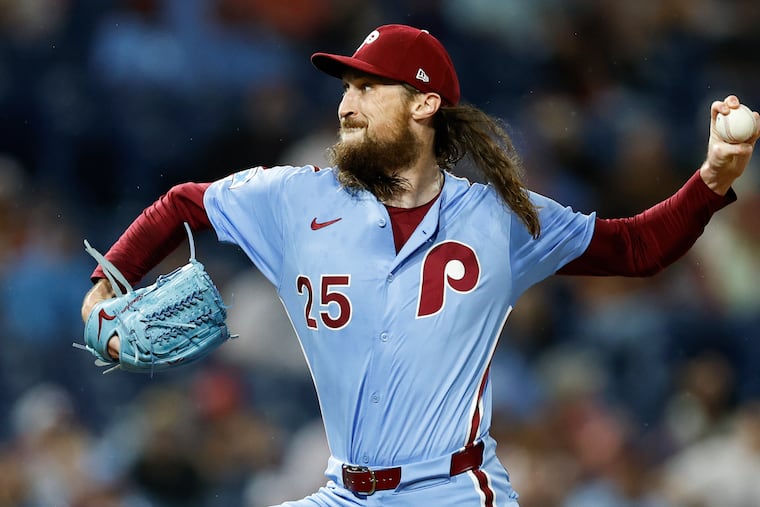
Strahm was under contract for the 2026 season at $7.5 million and was set to become a free agent afterward. With the Phillies unlikely to commit to another multi-year bullpen deal after adding Keller, the front office faced a difficult decision. Rather than risk losing Strahm for nothing following the 2026 season, Philadelphia chose to convert his value into a controllable asset now, even if it meant parting with a popular and productive reliever.
In many ways, the trade reflects the Phillies’ broader offseason philosophy. The team remains firmly in win-now mode, but it is also prioritizing sustainability. The Keller signing addressed an immediate bullpen need created by recent departures, while the Strahm trade helps restock the pitching depth and preserve long-term flexibility. It is a calculated gamble that Bowlan can provide solid contributions over multiple seasons, even if he does not match Strahm’s peak effectiveness right away.

For Kansas City, the move signals an effort to stabilize and upgrade the bullpen with a proven arm. Strahm brings postseason experience, consistency, and leadership to a Royals team looking to take steps forward. For Strahm himself, the trade closes a chapter in Philadelphia while reopening one in the city where it all began.
Ultimately, the deal underscores how difficult roster decisions can be for contenders. The Phillies are sacrificing short-term bullpen dominance in exchange for control, depth, and future value. Whether that trade-off pays off will depend on Bowlan’s development and the bullpen’s ability to remain effective without Strahm. What is clear is that Philadelphia’s front office is not standing still, continuing to reshape the roster with an eye on both the present and the seasons to come.