
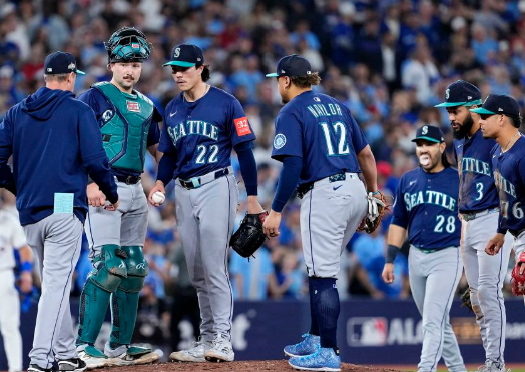
The Seattle Mariners find themselves in an unexpected position this offseason as discussions have quietly reopened about the possibility of reuniting with veteran catcher Mitch Garver. When the team declined his mutual option at the start of the offseason, it appeared the organization was ready to move in a new direction behind the plate. Garver was bought out of his contract and immediately became a free agent, ending what many assumed was his short and final chapter with the Mariners. Yet weeks later, as the catcher market has taken shape and internal depth has thinned, the idea of bringing him back has resurfaced in a way few predicted when the offseason began.

Garver’s first two seasons in Seattle were characterized more by inconsistency than impact. Brought in as a bat-first option expected to add power and on-base potential to the middle of the lineup, he struggled to meet those expectations. His offensive production dipped across both seasons, falling well short of the numbers he posted earlier in his career. Coupled with defensive concerns—declining framing metrics, reduced throwing accuracy, and difficulty controlling the running game—Garver entered the winter as a player the club could move on from without hesitation.
But as the Mariners moved forward with their offseason plans, a series of decisions and roster changes created a catching situation far less stable than the front office expected. After declining Garver’s option, the team made other moves that reshaped its depth chart, most notably trading away Harry Ford, the talented young catching prospect once projected as a long-term contributor.
His departure opened a vacuum behind starter Cal Raleigh, leaving the Mariners without a clear backup option who could handle major league innings. With catching depth across the league thin and few appealing alternatives on the free-agent market, Seattle found itself reassessing its stance on Garver.
The front office’s openness to a reunion does not necessarily reflect a belief that Garver has turned a corner or that he is a long-term solution at the position. Rather, it indicates a recognition of practicality. Seattle knows what Garver brings, and while those contributions come with limitations, they are at least predictable. He knows the staff, the organization, and the demands of the role. In a position where trust and familiarity are critical, that combination carries value, even if the overall performance does not match the ideal profile of a backup catcher on a contender.

The Mariners also face the reality that the free-agent catcher market is notoriously thin. Many teams looking for catching help are competing for the same small handful of players. Those with defensive upside want multiyear commitments, while those with offensive ability often come with Garver-like defensive drawbacks. Seattle’s internal options provide little relief. Several young catchers within the organization are still a season or more away from being ready for consistent major league work. Others are viewed primarily as depth pieces, suitable for Triple-A but not trusted to handle the demands of sharing a staff with a group of pitchers who rely heavily on game-calling stability.
In that context, Garver becomes less a luxury and more a pragmatic fallback. A one-year deal at a reduced salary would cost the Mariners very little and preserve roster flexibility. In such a scenario, Garver would not be counted on to carry an offensive load or catch frequently.

Instead, he would serve as a veteran presence capable of stepping in for Raleigh during off days, managing late-game defensive substitutions when necessary, and providing occasional designated hitter at-bats. His familiarity with the pitching staff might also lessen the adjustment period that often accompanies new catcher acquisitions.
Still, the potential reunion is not universally supported, and skepticism remains widespread among fans and analysts. Many point to Garver’s age and declining defensive metrics as indicators that his best years are behind him. Catchers entering their mid-thirties often experience sharp drop-offs in mobility and reaction time, two traits essential for consistent defensive performance. Offensively, Garver’s bat no longer provides the margin of error it once did when his glove lagged behind. If he cannot deliver league-average production at the plate, the defensive shortcomings become harder to justify.
The Mariners’ own organizational trajectory complicates the matter further. They are a franchise attempting to push into contention. Their offseason decisions signal a desire to compete, and every roster spot carries weight. Using one of those spots on a veteran whose value is based more on stability than upside can be viewed as a conservative move at a time when the team may need bolder choices. Some within the fanbase argue that if Seattle is going to give playing time to a catcher with glaring weaknesses, they may as well allocate those innings to a younger player with room to grow.
Despite those concerns, the possibility of a reunion continues to linger because it fits the current landscape. The Mariners are balancing budget considerations with roster construction, and Garver represents a solution that is both affordable and workable.
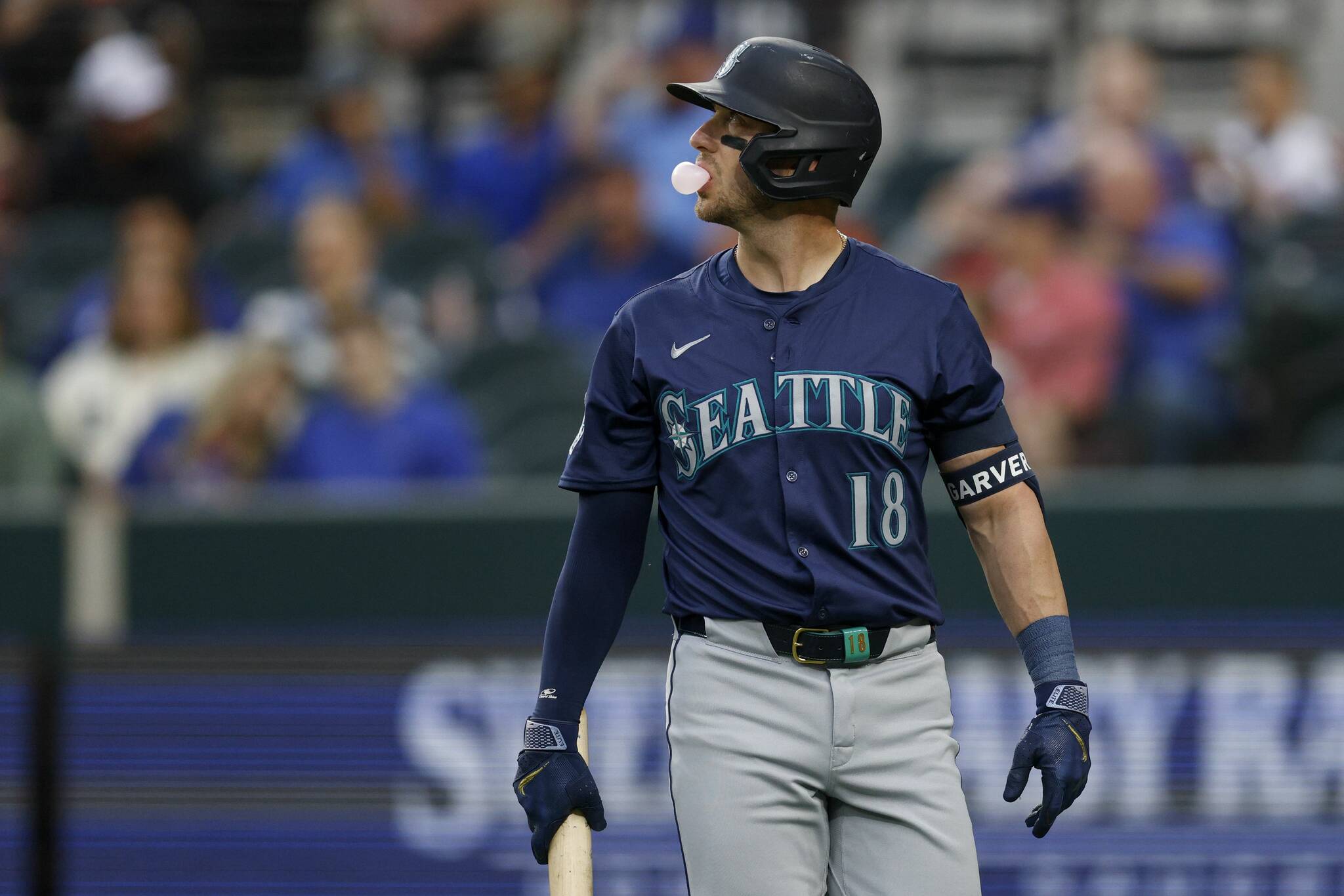
If the market does not yield a more appealing option, or if trade demands prove too steep, Seattle may judge the veteran as the best available answer for a very specific role. That does not signal a long-term commitment or a shift in organizational philosophy. It simply acknowledges that the offseason sometimes forces teams to revisit doors they believed were already closed.
As the offseason progresses and the market continues to evolve, the Mariners will keep evaluating their options. Garver’s future in Seattle will likely depend on timing, opportunity, and whether another team sees more value in him than the Mariners do. For now, the door is open—not widely, but enough to let the possibility breathe. And in an offseason where uncertainty has been a constant theme, even a small measure of familiarity can become a significant factor.