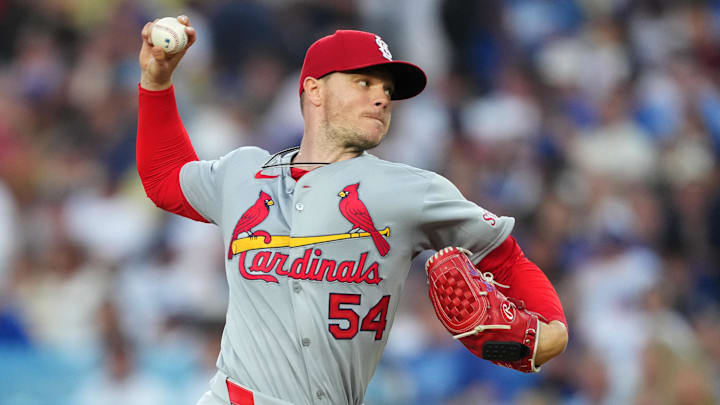
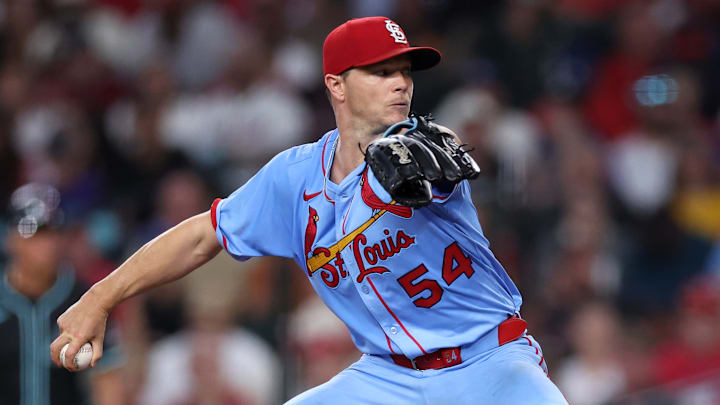
The Boston Red Sox made a major statement on Tuesday by acquiring veteran right-hander Sonny Gray from the St. Louis Cardinals, a move that signals a renewed focus on stabilizing their rotation and adding veteran presence to a roster packed with young talent. In exchange for the three-time All-Star, St. Louis receives left-handed pitching prospect Brandon Clarke and right-hander Richard Fitts, while Boston will get $20 million in cash to help offset Gray’s remaining salary, according to reporting from ESPN’s Jeff Passan. The trade marks a significant early-offseason shift for both organizations, each seeking to reshape its identity after a turbulent 2024 season.

Gray, 36, arrives in Boston fresh off a season in which he went 14–8 with a 4.28 ERA and took every scheduled turn in the rotation, surpassing 180 innings and demonstrating the durability that has defined his career. Although his performance last year fell short of his dominant 2023 campaign, when he finished as an AL Cy Young finalist with the Twins, Gray remained one of the most reliable starters in the National League. His ability to mix pitches, change speeds, and generate soft contact gives Boston a dependable mid-rotation presence and a much-needed innings-eater—something the club sorely lacked in a 2024 season marked by inconsistency and injuries.

One of the most notable elements of the transaction is that Gray waived his no-trade clause to make the deal possible. While he initially signed with St. Louis believing the club was poised for contention, sources suggest he was intrigued by the direction of Boston’s roster construction and the opportunity to pitch in a competitive AL East environment he knows well from his past stint with the Yankees. The willingness of an established veteran to approve a move to Boston may also signal that the Red Sox, under their restructured front office, have regained some appeal around the league after a few years of uneven results and hesitation from top free agents.
Financially, the inclusion of $20 million from the Cardinals is a crucial component that allowed Boston to take on Gray without limiting future flexibility. The cash helps balance out the substantial salary remaining on Gray’s contract, providing the Red Sox room to continue adding pitching depth during the remainder of the offseason. With several rotation spots still unsettled and a bullpen in need of reinforcements, the Gray deal may be only the first of several moves Boston makes before spring training approaches.

For the Cardinals, the move reflects a strategic pivot toward long-term stability. By sending Gray to Boston, St. Louis acquires two intriguing arms with different strengths but shared upside. Clarke, a tall and athletic left-hander, features a lively mid-90s fastball and a developing slider that has impressed scouts. His command remains a work in progress, but with his physical frame and raw stuff, the Cardinals believe he has the potential to grow into a mid-rotation starter if he continues refining his mechanics and strike-throwing.

Fitts, on the other hand, offers a more polished skill set. Known for his advanced command and strong three-pitch mix, he has long been considered one of Boston’s steadier pitching prospects. His competitive demeanor and mound presence have earned praise throughout the organization, and his proximity to the majors makes him a possible rotation option for St. Louis as early as this coming season. Together, Clarke and Fitts introduce both upside and near-term depth to a Cardinals system seeking a reset after relying heavily on aging veterans in recent years.
The trade carries significant implications for both teams moving forward. For Boston, the addition of Gray not only upgrades the front of the rotation but also introduces a leader with postseason experience to mentor rising pitchers such as Kutter Crawford, Tanner Houck, and Bryan Mata. His presence should help stabilize a pitching staff that struggled to establish continuity or identity in 2024. Boston’s roster still has gaps, but acquiring Gray at minimal financial strain gives the front office breathing room to explore more additions, whether via free agency or further trades.

Meanwhile, the Cardinals appear to be embracing a retooling phase rather than an immediate return to aggressive win-now tactics. Trading Gray allows them to redistribute resources toward youth development and long-term pitching sustainability. With Clarke and Fitts joining other promising arms in their pipeline, St. Louis may soon field a rotation built more around homegrown or cost-controlled talent—an approach they’ve used successfully in past eras. While the Cardinals may take a modest step back in experience for the upcoming season, the organization seems committed to building a more stable foundation for the future.
In a league where pitching remains the most coveted resource, deals like this one are increasingly rare: a trade that satisfies the pressing needs of both sides without a clear winner or loser. Boston addresses its most urgent issue by adding a proven, durable starter who can anchor the staff and bring veteran savvy to a younger group. St. Louis, meanwhile, gains two arms who could contribute meaningfully for years to come, all while easing future payroll commitments.
Ultimately, the trade for Sonny Gray could prove to be a pivotal moment for the Red Sox as they attempt to push back into postseason contention, and a similarly important step for the Cardinals as they recalibrate for the long run. Whether the deal reshapes either franchise’s trajectory will depend on how Gray performs in Boston—and how quickly Clarke and Fitts progress in St. Louis—but for now, both sides appear satisfied with a transaction rooted in practicality and forward-thinking roster strategy.