
The Philadelphia Phillies appear poised to part ways with right-handed pitcher Ranger Suárez this offseason, signaling a potential major shakeup in their starting rotation. Suárez, who has been a steady contributor for Philadelphia, could now enter the free-agent market as one of the most intriguing pitchers available. With four high-level starters already on the Phillies’ roster and top prospect Andrew Painter emerging as a potential anchor for the rotation, the organization seems ready to let Suárez pursue a lucrative deal elsewhere.
For Suárez, this moment represents both risk and opportunity. As a free agent, he could negotiate with any team, and given his age, track record, and durability, he has the potential to command a significant long-term contract. Analysts are projecting that he could land a deal comparable to some of the top pitchers recently signed, reflecting both the scarcity of proven arms and the high stakes of modern pitching markets.

Bleacher Report analyst Kerry Miller recently predicted that Suárez could sign a five-year, $115 million contract with the Chicago Cubs, positioning him as one of the most impactful acquisitions of the offseason. Miller highlighted Suárez’s performance, durability, and potential upside, suggesting that teams looking to solidify their rotations would find him particularly attractive. He noted that while teams must weigh how much they are willing to invest, Suárez’s proven ability to contribute consistently makes him a highly desirable asset, especially when compared to recent free-agent pitchers who secured similar contracts.
Miller also drew parallels between Suárez and pitchers like Kevin Gausman and Robbie Ray. Both of those pitchers signed substantial deals—Gausman for five years at $110 million and Ray for five years at $115 million—at similar ages, with career ERAs around 4.00 at the time of signing. Suárez, by many assessments, could be in a better position than either of them, offering a mix of reliability and upside that could make him an even more attractive option for contending teams. With several projections estimating Suárez’s average annual value at $23 million, there’s a possibility that a team willing to invest could secure a true bargain if he continues to perform at his current level.

The Chicago Cubs, in particular, appear to be a team that could meet Suárez’s financial and competitive expectations. Last season, pitching remained one of the Cubs’ weaker areas, highlighting a pressing need for a reliable starter who can log innings and stabilize the rotation. Although Shota Imanaga recently opted back into a qualifying offer with the Cubs, the team still needs to add more quality arms to contend seriously for a playoff run or a World Series title. Suárez could provide that missing piece, giving the Cubs a proven starter capable of taking the ball every fifth day while offering both control and strikeout ability.
Adding Suárez would also help offset potential losses elsewhere on the Cubs’ roster. With Kyle Tucker projected to leave in free agency, Chicago could find itself retooling both its pitching and position-player depth. Suárez’s inclusion in their offseason plans could serve as a stabilizing force, allowing the team to pivot strategically while maintaining competitiveness. For a Cubs rotation that has struggled with consistency, the addition of a proven starter could be transformative, offering both innings and performance stability in a league where pitching depth often determines postseason success.
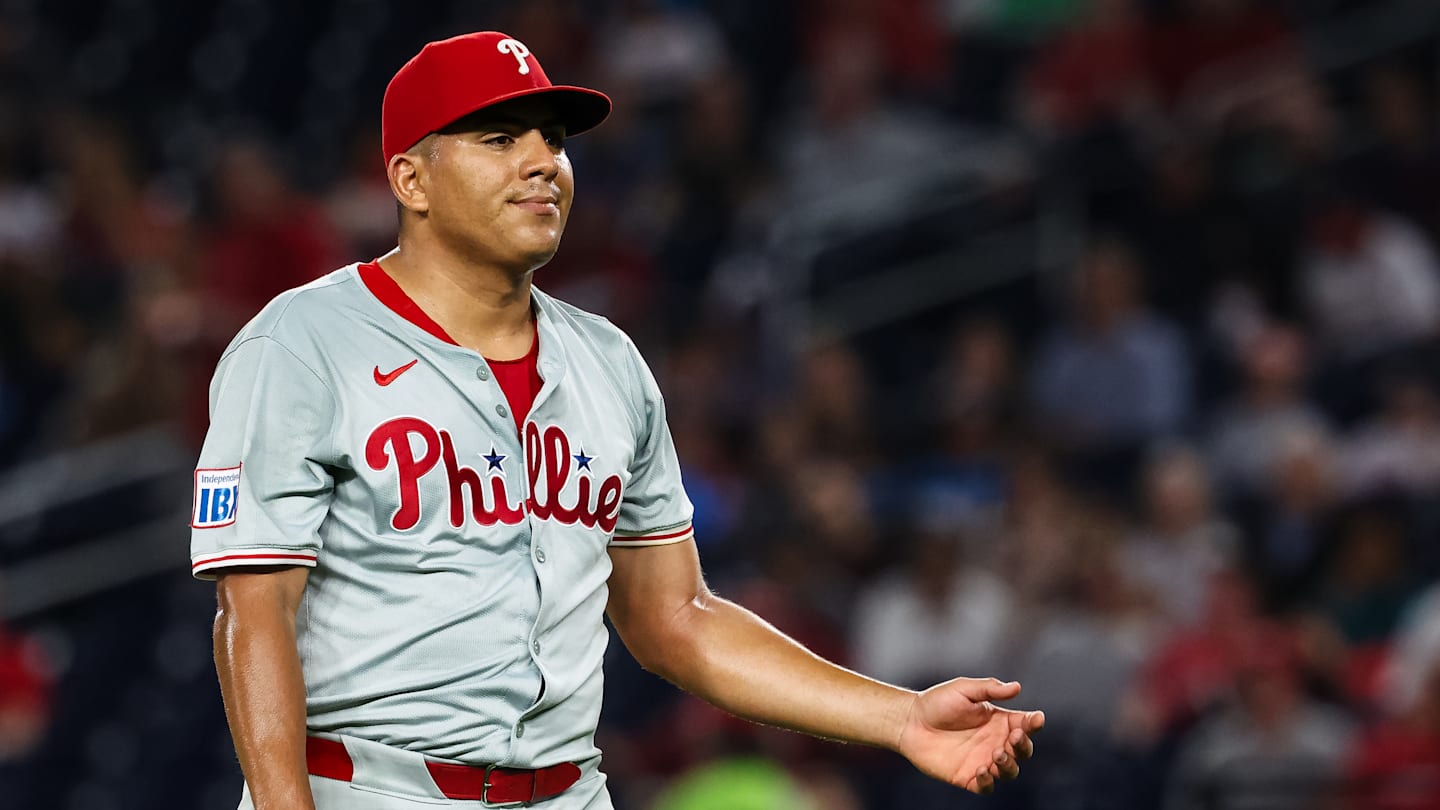
From the Phillies’ perspective, allowing Suárez to explore free agency is a pragmatic decision. While he has been a reliable contributor, the emergence of Andrew Painter and the depth already present in the rotation give Philadelphia the flexibility to reallocate payroll and plan for the future. Painter, a highly regarded prospect with a strong blend of velocity, command, and composure, represents a homegrown option that could step into the rotation, reducing the need for the Phillies to retain Suárez at a potentially high cost. Letting Suárez walk frees resources for other roster priorities while enabling the organization to develop its young arms.
For Suárez, free agency presents an opportunity to secure both financial stability and a long-term role with a contending team. A five-year contract with a top-tier club could provide the security and recognition that come with being considered an elite starting pitcher. If he lands in a city like Chicago, Suárez would be stepping into a situation where his performance could have immediate playoff implications, positioning him as a central figure in a rotation hungry for stability and success.

The financial landscape of the offseason makes Suárez’s situation particularly compelling. Teams are increasingly willing to invest heavily in proven starters, recognizing that quality pitching remains the cornerstone of long-term success. With limited elite free-agent options available, a pitcher like Suárez, who combines experience, durability, and upside, becomes a coveted commodity. Any team looking to compete at the highest level is likely to view him as a cornerstone signing capable of anchoring a rotation for multiple seasons.
Analysts also note the strategic considerations teams must weigh when pursuing Suárez. His contract would likely be among the highest in the free-agent market, and organizations will need to determine whether he fits within their payroll plans and long-term competitive strategy. While the investment is significant, the upside—particularly if Suárez maintains or improves on his current performance—could make the deal one of the most impactful acquisitions of the offseason. Teams must balance the potential risk with the opportunity to secure a frontline starter who can influence both regular-season and postseason outcomes.
The Phillies’ decision to let Suárez enter free agency also underscores a broader trend in baseball: the careful management of pitching resources and payroll flexibility. As more teams adopt analytics-driven strategies to maximize player value, organizations increasingly weigh the cost of retaining veteran starters against the potential of younger, controllable arms. For Suárez, this timing is fortuitous, as his peak years coincide with an offseason hungry for starting pitching. His availability could trigger a competitive bidding process, reflecting both his talent and the market scarcity of reliable pitchers.
In summary, Ranger Suárez’s impending free agency represents a pivotal moment for both the player and the Phillies. Philadelphia’s willingness to part ways appears rooted in strategic planning, leveraging emerging talent like Andrew Painter while allowing Suárez the opportunity to secure a substantial contract elsewhere. For Suárez, the market is poised to reward his durability, effectiveness, and potential for growth.

With predictions of a five-year, $115 million deal with a team like the Cubs, the upcoming months will be crucial for determining the next chapter of his career. His decision, and the team that lands him, could have significant implications for both the competitive balance of the league and the trajectory of the Phillies’ roster.