The New York Yankees have once again found themselves at the center of early-season trade speculation, this time involving a potential deal with their cross-town rivals, the New York Mets. While nothing is currently in motion, the idea gaining traction is that the Yankees could target infielder Brett Baty as a way to address their growing concerns at third base. The suggestion comes from MLB analyst Stephen Parello, who believes Baty could be a worthwhile gamble given the Yankees’ current roster issues and the Mets’ evolving situation.

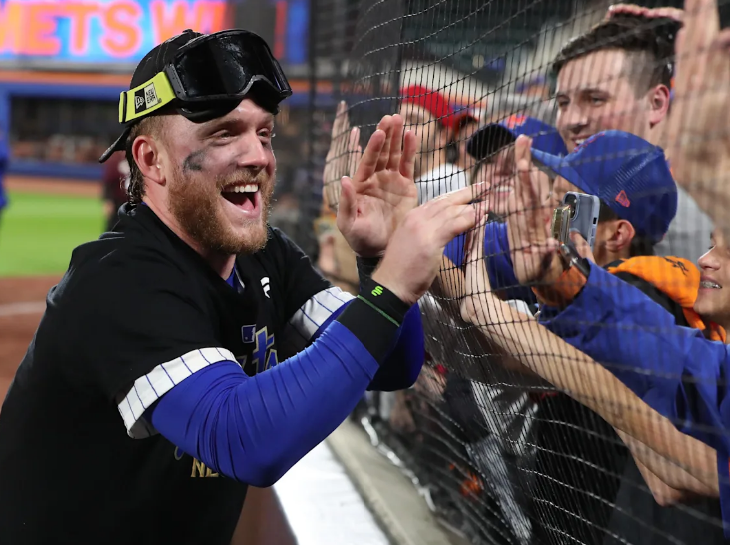
Baty’s name has surfaced in trade conversations before, particularly during the offseason, when the Mets were evaluating how to balance a roster that has undergone notable changes. Once viewed as one of the organization’s most promising young hitters, Baty took time to adjust to the major league level but eventually delivered an above-average offensive season, posting a 111 wRC+. That performance hinted at the potential many scouts saw in him during his rise through the minor leagues. Known for his left-handed swing and raw power, Baty was projected as a player capable of hitting in the range of 15 to 20 home runs annually, though that power has yet to consistently appear at the highest level.

At the start of the current season, Baty’s numbers have dipped, with a batting average hovering around .197 and limited run production. Even so, his overall profile remains intriguing. He has expanded his defensive versatility, gaining experience not only at third base but also at second base, first base, and even in the corner outfield. That kind of flexibility is increasingly valuable in today’s game, particularly for a team like the Yankees, whose manager Aaron Boone often emphasizes matchup-based lineups and positional adaptability.

The Yankees’ interest in a player like Baty is rooted in a very real and immediate problem: the lack of offensive production from their current third base situation. Ryan McMahon, who was brought in to provide stability and defensive reliability, has struggled significantly at the plate. With a batting average sitting at .140, along with just one home run and four runs batted in, McMahon has not delivered the kind of offensive contribution the team needs from a corner infield position. While his defense has been solid, it has not been enough to offset his struggles with the bat.

As a result, Boone has already begun adjusting his lineup, reducing McMahon’s playing time and giving more opportunities to Amed Rosario. What stands out about this shift is that Rosario has been starting even in situations where the pitching matchup would not necessarily favor him, such as against right-handed pitchers. This indicates that the Yankees’ decision is less about tactical platooning and more about a lack of confidence in McMahon’s current form. Boone has acknowledged that McMahon is working behind the scenes to correct mechanical issues, particularly related to his swing and shoulder positioning, but for now, the team is prioritizing production.
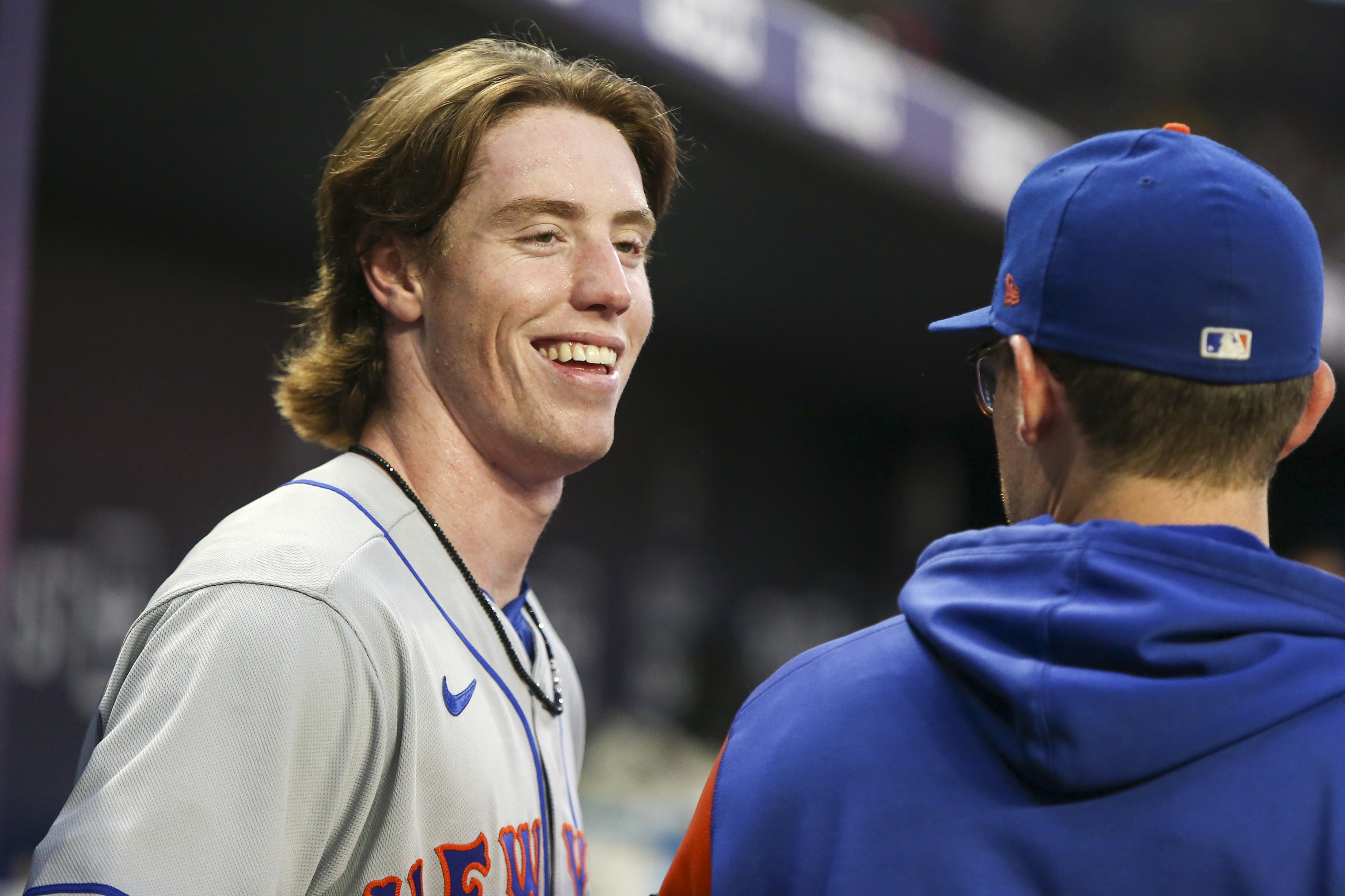
This ongoing uncertainty at third base is what makes the idea of acquiring Baty appealing, at least on paper. He would not need to immediately take over as the everyday starter but could instead slot into a platoon role, sharing time with Rosario while also providing depth across multiple positions. His left-handed bat would add balance to a lineup that has often leaned heavily toward right-handed hitters, and the dimensions of Yankee Stadium could potentially help unlock more of his power. For a player whose offensive upside is still not fully realized, a change of environment can sometimes make a meaningful difference.

From the Mets’ perspective, the situation is more complex but still presents a possible pathway to a deal. The team’s roster construction has shifted, and players like Bo Bichette have altered the infield dynamic, making it more difficult for Baty to secure a consistent role. If the Mets continue to struggle in the standings, they could pivot toward selling at the trade deadline, looking to move players who are no longer central to their long-term plans in exchange for assets that better fit their needs. Baty, with his combination of youth, upside, and remaining team control, could be an attractive piece in that context.
However, despite the logic behind the proposal, several factors make such a trade far from certain. Deals between the Yankees and Mets are relatively rare, largely due to the nature of their rivalry and the scrutiny that comes with any transaction between the two New York franchises. Both organizations are typically cautious about making moves that could be perceived as strengthening the other side, particularly in a high-profile market. While trades have occurred between them in the past, they are the exception rather than the rule.
Additionally, the Yankees may ultimately prefer to pursue a more established and consistent offensive player if their third base issues persist. Baty represents a high-upside option, but he also comes with risk, given his inconsistent performance at the major league level. For a team with postseason aspirations, relying on a player still trying to find his footing could be seen as a gamble. On the other hand, that same uncertainty might make him more affordable in terms of trade cost, which could appeal to a front office looking to improve without sacrificing too many key assets.
Timing is another important consideration. Early-season speculation often differs significantly from what actually unfolds closer to the trade deadline. Teams need more time to evaluate their rosters, identify their true needs, and determine whether they are buyers or sellers. The Yankees will want to see whether McMahon can rebound and whether internal options can stabilize the position, while the Mets will need to decide if their early struggles are temporary or indicative of a larger issue that requires a shift in strategy.
In the meantime, the idea of Baty joining the Yankees remains an interesting talking point rather than a concrete plan. It highlights the challenges both teams are facing and the ways in which their needs could, in theory, align. For the Yankees, the focus is on finding reliable production at third base and maintaining lineup balance. For the Mets, it is about maximizing the value of their roster and making decisions that position them for both the present and the future.
As the season progresses, the situation will become clearer. If McMahon continues to struggle and the Yankees remain in contention, the pressure to make a move will increase. Similarly, if the Mets fall further behind in the standings, they may become more open to dealing players like Baty. Until then, this proposed trade serves as a reminder of how quickly circumstances can change in baseball and how even unlikely partnerships can become plausible under the right conditions.