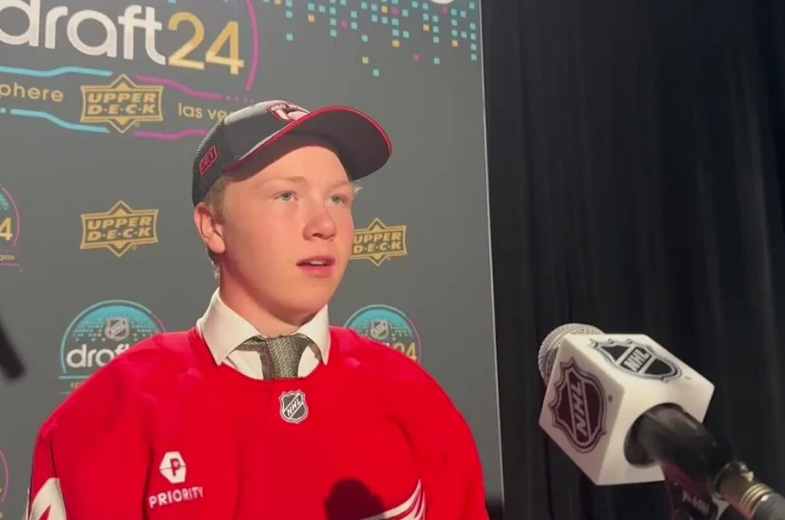
Max Plante, the recent Hobey Baker Award winner, is drawing attention not just for his on-ice excellence but for his decision to delay signing with the Detroit Red Wings and the reason behind it is both strategic and personal.
Plante, one of the most highly regarded young talents in college hockey, has the option to turn pro immediately after a standout season. Normally, players in his position—especially Hobey Baker winners tend to sign quickly and begin their NHL development path. However, Plante is taking a different route, choosing patience over urgency.

The key reason centers around development and timing. Rather than rushing into the professional ranks, Plante reportedly wants to ensure he is fully prepared to make an impact at the next level. By holding off on signing, he maintains flexibility whether that means returning to college for further development, evaluating his fit within the Red Wings organization, or simply allowing more time to physically and mentally prepare for the jump to pro hockey.
There’s also a strategic element tied to contract structure. Delaying a signing can sometimes give players more control over when their entry-level contract begins, which can impact long-term earnings and team control. While that may not be the primary motivation, it’s often part of the broader calculation for top prospects and their representatives.

From Detroit’s perspective, this isn’t necessarily a negative situation. The Red Wings still hold his rights, and giving a young player extra time to develop can ultimately benefit the organization. Rushing prospects too early can sometimes hinder growth, so patience on both sides could lead to a better outcome.
What makes this situation “unique” is that it reflects a growing trend among elite prospects who are more intentional about their development path. Instead of following the traditional immediate jump to the NHL, players like Plante are carefully weighing their options and prioritizing long-term success over short-term opportunity.
For now, all eyes will remain on Plante’s next move. Whether he signs later, returns to college, or explores other development options, his decision will be closely watched—not just because of his talent, but because it highlights how the landscape for top hockey prospects continues to evolve.