Willson Contreras Returns to the Red Sox Lineup After Clearing Concussion Protocol
Baseball is a sport that requires skill, concentration, and courage, but it is also a game in which player safety has become increasingly important in recent years. One of the clearest examples of this balance between competition and health was seen in the recent series between the Boston Red Sox and the Los Angeles Dodgers. After being struck in the helmet by a fastball, Red Sox first baseman Willson Contreras returned to the lineup on Sunday night after successfully clearing concussion protocol. His return came in Boston’s 8-4 victory over the Dodgers, concluding a dramatic three-game series in Los Angeles. Although Contreras did not record a hit in the game, his presence in the lineup represented much more than statistics; it highlighted the significance of modern medical procedures, the resilience of professional athletes, and the importance of protecting players in Major League Baseball.
The incident occurred during Friday night’s game when Contreras was hit on the side of the helmet by a fastball thrown by Dodgers pitcher Will Klein. Any time a player is struck in the head by a pitch, concern immediately rises among teammates, coaches, fans, and medical personnel. Head injuries are among the most serious risks in sports because their effects are not always visible right away. A player may appear alert initially and still develop symptoms of a concussion later. Recognizing this danger, Major League Baseball has implemented strict concussion protocols designed to ensure that players do not return to action before they are medically cleared.
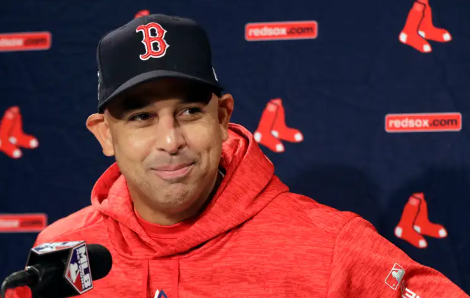
After being hit, Contreras was examined by the Red Sox medical staff and removed from the game. Boston went on to win that contest, but the focus quickly shifted from the result to the condition of one of the team’s most important players. The following day, Contreras was held out of the lineup during Boston’s 3-2 victory over Los Angeles. Red Sox interim manager Chad Tracy later explained that Contreras had to complete the remaining steps of the concussion evaluation process before he could be allowed to return. This cautious approach demonstrated how seriously teams now treat potential head injuries.
Contreras eventually passed all the required tests and was reinstated to the lineup for Sunday night’s finale. Batting cleanup, he went 0-for-5 with two strikeouts, but the box score did not diminish the importance of his return. The fact that he was healthy enough to resume playing was the real story. Baseball players often pride themselves on toughness and their willingness to play through pain, yet head injuries are different from other injuries. A bruised arm or sore leg can sometimes be managed, but a concussion affects the brain, and rushing a player back too quickly can have long-term consequences.
The modern concussion protocol in Major League Baseball is the result of years of growing awareness about brain injuries in sports. In earlier eras, players who were hit in the head might have remained in the game if they could stand up and continue playing. Today, medical professionals conduct a series of evaluations that may include symptom checks, cognitive tests, balance assessments, and ongoing monitoring. The goal is not merely to determine whether a player feels ready to play, but whether it is medically safe for him to do so. Contreras clearing those final steps before Sunday’s game showed that the system is working as intended.
Beyond the medical aspect, Contreras’ return also speaks to his value to the Red Sox. He entered the game batting .284 with 23 home runs and 67 RBIs, numbers that place him among the most productive offensive players in the American League. He also earned his fourth All-Star selection this season, a recognition of both his consistency and his impact. A player with that level of production is not easily replaced. His ability to drive in runs and provide power in the middle of the lineup makes him a key figure in Boston’s offense.
For the Red Sox, having Contreras back was especially important in the context of a demanding season. Teams competing for postseason position cannot afford to lose star players for extended periods if it can be avoided. However, the organization also had to resist the temptation to prioritize short-term competitive needs over long-term health. By holding him out on Saturday and waiting for full clearance, Boston showed that protecting the player came first. That decision likely earned the trust of both the player and the clubhouse.
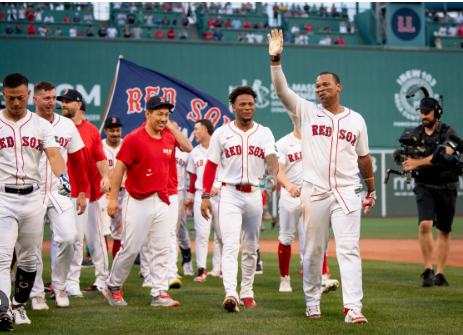
The series against the Dodgers added another layer of significance to the story. Boston won all three games, including Sunday’s 8-4 victory. Defeating the Dodgers on the road is never easy, and a sweep in Los Angeles is an impressive accomplishment. The Dodgers are one of baseball’s most talented and high-profile teams, and the series drew considerable attention. Contreras’ return in the finale became part of a broader narrative of resilience and momentum for the Red Sox.
Although Contreras did not contribute offensively on Sunday, baseball is a sport in which even elite hitters experience difficult games. A single hitless performance does not erase an excellent season. In fact, returning after a frightening incident and immediately stepping back into the cleanup spot can itself be mentally challenging. Hitters who have recently been struck in the head sometimes need time to regain complete comfort in the batter’s box. Standing close to a pitcher throwing 95 miles per hour requires confidence and focus, and rebuilding that confidence is part of the recovery process.
The incident also highlights the risks faced by players despite the protective equipment available today. Batting helmets have improved significantly over the decades and have undoubtedly prevented many serious injuries. Nevertheless, a direct impact from a major league fastball can still be dangerous. Continued research into helmet design and other protective technologies remains essential. Baseball has already introduced additional protections for some players, and future innovations may further reduce the risk of head injuries.
Another important aspect of this story is the role of communication between medical staff, coaches, and players. A successful concussion protocol depends on honest reporting of symptoms and careful evaluation by professionals who are not influenced by the pressure to win games. Chad Tracy’s comments indicated that the process was followed step by step. This transparency helps reassure fans that decisions are being made responsibly.
From a broader perspective, Contreras’ return reflects how professional sports are evolving. The culture of simply “playing through everything” is gradually being replaced by a more informed understanding of health and performance. Protecting athletes is not a sign of weakness; it is an investment in their careers and their lives beyond sports. Players who receive proper treatment and adequate recovery time are more likely to perform well over the long term.

For Red Sox fans, the most encouraging takeaway is that their All-Star first baseman avoided a more serious outcome. Head injuries can sometimes sideline players for weeks or even months, and in severe cases they can affect careers. The fact that Contreras was able to return within two days suggests that the medical evaluations did not reveal a lingering concussion issue. Even so, continued monitoring will remain important as the season progresses.
In conclusion, Willson Contreras’ return to the Boston Red Sox lineup after clearing concussion protocol was a significant moment that extended far beyond the final score of an 8-4 victory over the Los Angeles Dodgers. The incident underscored the dangers of head injuries in baseball, the value of modern concussion protocols, and the responsibility teams have to protect their players. It also highlighted Contreras’ importance to the Red Sox as an All-Star performer and middle-of-the-order threat. While he went hitless in his first game back, his successful return represented resilience, professionalism, and the effectiveness of a system designed to place health first. In today’s Major League Baseball, safeguarding players and competing at the highest level are not opposing goals; they are goals that must work together, and the handling of Willson Contreras’ injury and recovery provided a strong example of that balance in action.